Fix, raise or replace the garden wall you share, with the cost agreed
For homeowners in England and Wales with a masonry garden wall on the boundary, and for neighbours who share it. Find out who needs to do what, and compare quotes from party wall surveyors.
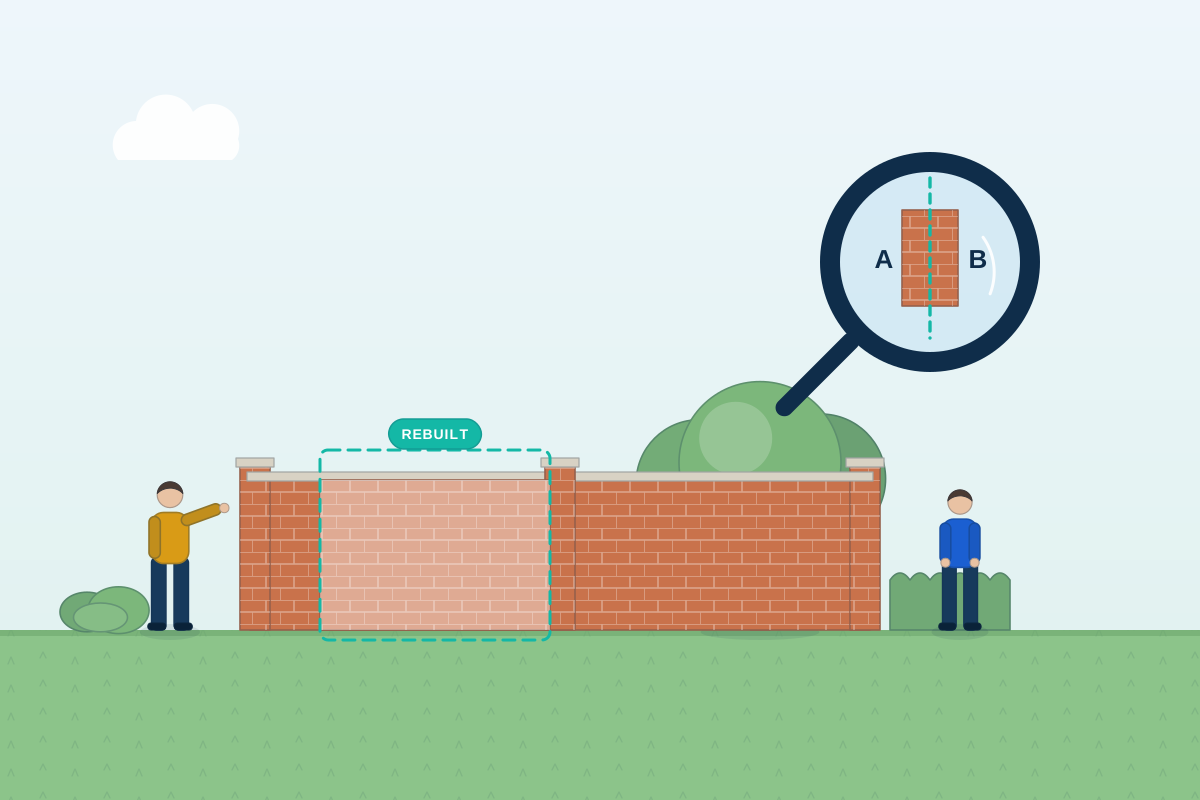
A party fence wall is a wall that is not part of a building and stands astride the boundary between two gardens, so both neighbours have an interest in it. In England and Wales the Party Wall etc. Act 1996 covers it. Typical jobs are rebuilding a leaning brick wall, raising it, repairing it or building a new one on the line. Timber fences and hedges are not covered, and a wall built wholly on one side is a different case, so the first job is working out which you have. A party wall surveyor can check this, serve the right notice and agree who pays.
How a professional can help
- Working out whether it is a party fence wall: They look at where the wall actually stands against the boundary, how it is built, and your deeds and plans, to decide whether it is astride the line, wholly on one side, or a fence the Act does not cover.
- Serving the right notice: A new wall built on the boundary needs a line of junction notice at least one month ahead. Raising or rebuilding an existing wall, or repairing one that is defective, needs a party structure notice (the notice for work to an existing shared wall) at least two months ahead. They prepare and serve it.
- Agreeing who pays: Where both neighbours benefit, such as repairing a failing wall, the cost can be shared in fair proportions. Where one owner wants a taller or new wall for themselves, that owner normally pays. Surveyors record the split in the award, their written agreement.
- Protecting both gardens during the work: They agree access for the builder, protection for plants, patios and sheds, working hours, and how footings are dug so that roots and the neighbour’s foundations are not disturbed.
- Foundations, height and stability: A tall or long garden wall catches the wind like a sail. A structural engineer can design footings, piers and reinforcement so a raised or rebuilt wall is stable. Keep people away from any wall that is leaning badly until it has been checked.
- Disagreements about ownership and the line: If you disagree about where the boundary runs, they explain what the Act does and does not decide and point you to a boundary survey. The Act deals with the wall, not who owns the land.
Is this right for you?
- A brick or stone garden wall between you and a neighbour is leaning, cracking or crumbling and needs repair or rebuilding.
- You want to raise the wall for privacy or security, or build a new masonry wall along the boundary.
- You’re building a garden room, garage or retaining structure beside the wall and need to know whether you can dig beside it or build against it.
- A neighbour has told you they plan to alter the wall and you want to understand your rights.
How the project usually runs
- Check what kind of wall it is: A surveyor inspects the wall and its position against the boundary, and reads your title documents, to confirm whether it stands astride the line, wholly on one side, or is a timber fence outside the Act.
- Decide the work and the design: Your builder or engineer decides how to repair, raise or rebuild: new footings, brick type, piers, capping and damp courses. An engineer’s design is worth having where the wall will be taller or hold back soil.
- Serve the notice: A party structure notice, or a line of junction notice for a new wall on the boundary, is served on the neighbour with drawings, at least two months or one month ahead respectively.
- Consent or award: If the neighbour consents in writing, work can go ahead as described. If they object to a party structure notice, surveyors are appointed and an award sets out the work, access, timing and who pays.
- Build and finish: The wall is built or repaired as agreed, with both gardens protected. Afterwards the surveyors, if appointed, check both sides and agree any making good to plants, paving or the neighbour’s face of the wall.
What affects the cost
- The length and height of the wall, and the footings and reinforcement it needs.
- Whether the wall is repaired, partly rebuilt or taken down and rebuilt in full.
- Whether the neighbour consents, or surveyors need to be appointed to agree an award.
- How easy it is for the builder to reach the wall, and whether access over next door’s garden is needed.
- Trees or large shrubs close to the wall whose roots affect the footings.
- Matching existing brick or stone, capping and finishes on both sides.
The Act, planning and your wall’s height
- Surveyors cover the whole UK, but the Party Wall etc. Act 1996 itself applies only in England and Wales. Scotland and Northern Ireland have different rules for boundary walls.
- The Act covers walls astride the boundary, not timber fences or hedges. A wall built wholly on one owner’s land is usually that owner’s matter, though a surveyor can advise.
- Planning rules limit the height of walls and fences in many places, especially beside a road, in conservation areas and around listed buildings. Rules differ across the four nations, so check with your council before raising or replacing a wall.
- Party wall notices are separate from planning permission. A tall wall, or one holding back soil, may need an engineer’s design for safety.
Questions people ask
What is a party fence wall?
It is a wall, not part of a building, that stands astride the boundary between two properties and separates them, usually a masonry garden wall. The Party Wall etc. Act 1996 covers it in England and Wales. Timber fences, hedges and walls that only hold back soil are not covered, and a wall wholly on one person’s land is treated differently. A surveyor can confirm which you have.
Can I raise or rebuild a shared garden wall without my neighbour’s consent?
The Act gives you rights to raise, rebuild or repair a party fence wall, but only after serving the right notice. A neighbour who consents in writing saves time. If they object, surveyors settle the terms in an award. Starting without a notice can lead to disputes and delay, so serve it first.
Who pays for repairing a shared garden wall?
It depends on who benefits. Where both owners use the wall and it needs repair, the cost can be shared fairly between them. Where one owner wants a taller or entirely new wall, that owner normally pays. Surveyors can set this out in an award, so talk to your neighbour early.
Do I need a notice to build a new wall on the boundary?
If you build a new wall on, or right up to, the boundary, a line of junction notice may be needed, served at least one month before. A surveyor can tell you from your plans whether the wall’s position or its footings bring the Act into play, before you commit to a design.
What if we disagree about whose wall it is?
The Act deals with how work to the wall is done, not who owns the land. If you disagree about where the boundary runs, a boundary survey of deeds, plans and measurements can help. Try to settle it by talking or mediation, and don’t move or take down a wall while the question is open.
Available across the UK
Party wall surveyors cover the whole of the UK. The Party Wall etc. Act 1996 applies in England and Wales; Scotland and Northern Ireland have different rules, and a professional can tell you what applies to your property.
- Get free quotes
- Line of Junction Notices
- Boundary Disputes and Boundary Surveys
- Masonry and Boundary Wall Design
- Party Wall for Raising or Rebuilding a Party Wall
- Party Wall for Basements
- Party Wall for Beams and Padstones Cut Into the Wall
- Party Wall for Chimney Breast Removal
- Party Wall for Demolishing Shared Structures
- Party Wall for Loft Conversions
- Party Wall for New Builds on the Boundary
- Party Wall for Piling and Deep Excavation
- All services
- Find your area