Your neighbour sent you a party wall notice? Get clear advice
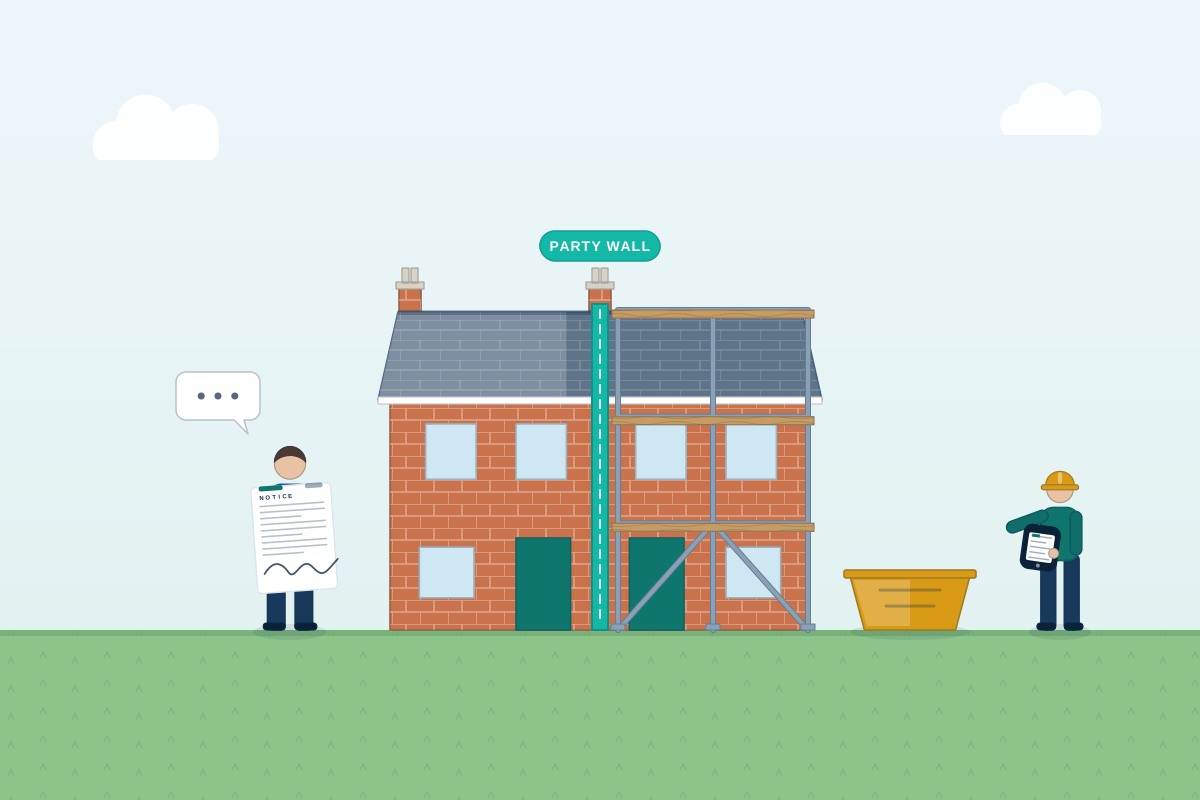
For homeowners in England and Wales whose neighbour is about to build. Find out what the notice means and how your home is protected, then compare quotes from party wall surveyors.
A letter headed “party wall notice” can be unsettling, especially with technical drawings attached. It means your neighbour plans work that the Party Wall etc. Act 1996 covers, such as cutting beams into the wall you share, building on the boundary or digging close to your foundations. You are not being asked to approve the engineering. You are being asked whether you consent, dissent (do not agree) or want something built in through a counter notice. Take advice before you reply. The building owner normally pays the reasonable fees of a surveyor who looks after your side.
How a professional can help
- Making sense of the letter and drawings: A surveyor explains in plain English what is being proposed and which part of the Act it falls under. They show how it could affect your wall, ceilings and garden, so you know exactly what you are being asked about.
- Checking the notice is in order: They check it names the work, includes plans and a start date, comes from the right person and has been served on every owner. A notice that misses those basics may not be valid.
- Working out who should reply: Notices go to the owner. If you rent, tell your landlord. In a flat, a freeholder or another leaseholder may also have been served, and joint owners should answer together. A surveyor helps you sort out who replies, and for whom.
- Choosing your own surveyor or a shared one: You can appoint your own surveyor, who acts fairly under the Act but looks at the work from your side, or agree to share one agreed surveyor with the building owner. A surveyor can explain the difference before you choose.
- Raising worries before the terms are set: Tell your surveyor about cracks, damp, old extensions, trees close to the wall, shared drains and access through your garden. They can ask for protection, monitoring or changes to the method while the terms are still being agreed.
Is this right for you?
- You’ve received a letter or email about party wall work and aren’t sure what it means.
- You’re worried about cracks, noise or damage to your home while your neighbour builds.
- You’d like a surveyor of your own rather than relying on the neighbour’s.
- You’re a landlord or leaseholder and need to know who should respond.
- You want to know whether the neighbour’s notice has been served properly.
How the project usually runs
- Keep the letter and note the date: Record the day it arrived, keep the envelope and plans, and don’t ignore it. The 14-day reply period runs from the day the notice was served.
- Check who it is for and what it says: Read which work it describes, whether plans and a start date are attached and who is named as owner. If you rent, pass a copy to your landlord. Don’t sign a consent form until you understand it.
- Decide how to reply: You can consent, dissent or, for work to a party structure, serve a counter notice. If you do nothing within 14 days, a dispute is treated as having arisen. A surveyor can explain each route before you choose.
- Photograph your own side: Before anyone visits, take dated photos of the party wall, ceilings, chimney breast and garden. They support the surveyors’ formal record of condition and help if cracks appear later.
- Keep notes while the work goes on: Write down dates, noise, access and any damage. Tell your surveyor early if something worries you. After the work, ask for your home to be checked against the earlier record.
What affects the cost
- The building owner normally pays the reasonable fees of the surveyors, so ask about this before you appoint anyone.
- Whether you appoint your own surveyor or share one agreed surveyor, which changes how many people are involved.
- How much of your home needs recording: a single party wall, or several rooms and the garden.
- How complicated the neighbour’s project is, such as a loft beam compared with a basement dig.
- Whether extra work you ask for benefits only your property, in which case you may bear that cost.
What a party wall notice does and doesn’t mean
- The Party Wall etc. Act 1996 applies in England and Wales. A neighbour’s building work in Scotland or Northern Ireland falls under different rules, which surveyors across the UK can explain.
- The notice is about how work to or near a shared wall is done. It is separate from planning permission, and being consulted on one is separate from replying to the other.
- The Act doesn’t usually let a neighbour block work the building owner is entitled to do, but it does let you ask for protection and for any damage to be made good.
Questions people ask
Do I have to agree to my neighbour’s party wall notice?
No, and agreeing is not your only sensible reply. You can consent, dissent, or ask for extra work in a counter notice. Dissenting doesn’t stop the work, but it brings surveyors in so the terms are set out in a party wall award that protects your home.
Who pays for my party wall surveyor?
Usually the building owner, the person having the work done, pays the reasonable fees of both surveyors, because the work is for their benefit. The party wall award sets out how costs are shared, and in some cases, such as extra work you ask for, you may pay part.
Should I use my neighbour’s surveyor to save time?
You can agree to appoint one surveyor jointly with the building owner, who then acts impartially for both sides as an agreed surveyor. That is different from simply accepting the surveyor the building owner has chosen. Some neighbours prefer their own surveyor, so that someone is looking at the work with their home in mind. The building owner normally pays the reasonable fees either way.
What if I am worried about damage to my house?
Ask for a schedule of condition, a written and photographic record of your home before work starts. If damage appears later, it shows what was there before, and the party wall award sets out how damage will be put right. A surveyor can also review the method, including temporary support and monitoring.
What if I only found out after the work began?
Tell your neighbour and speak to a party wall surveyor quickly. Starting work covered by the Act without notice can give you options, but what suits you depends on the details, so take advice early rather than waiting to see what happens.
Available across the UK
Party wall surveyors cover the whole of the UK. The Party Wall etc. Act 1996 applies in England and Wales; Scotland and Northern Ireland have different rules, and a professional can tell you what applies to your property.
- Get free quotes
- Adjoining Owner’s (Neighbour’s) Surveyor
- Counter Notices and Responding to a Notice
- Schedules of Condition
- Damage Claims and Making Good
- Line of Junction Notices
- Neighbour Liaison and Consent Letters
- Notices of Adjacent Excavation
- Party Structure Notices
- Party Wall Advice Before You Build
- Party Wall Notices (Preparing and Serving)
- All services
- Find your area