Get your retrofit assessed and coordinated to PAS 2035
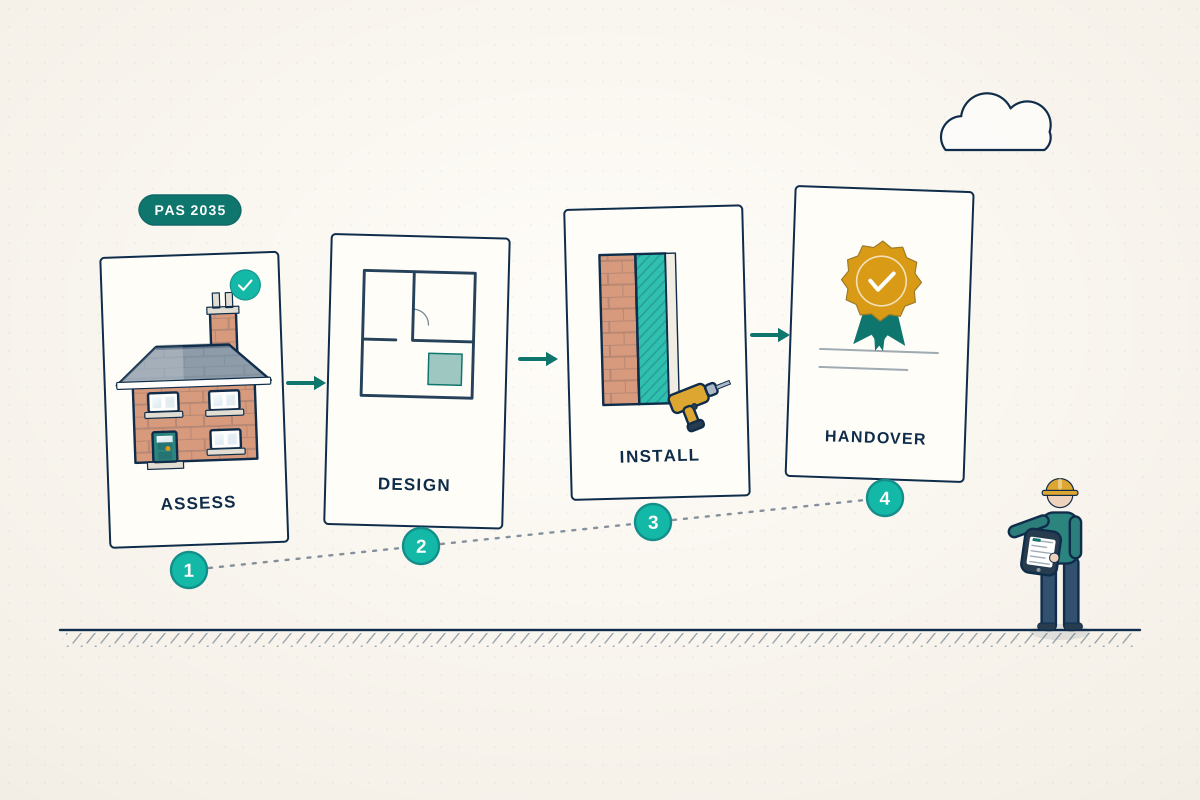
For homeowners, landlords and housing providers who need retrofit work to follow PAS 2035, often for funding. Compare quotes from Retrofit Assessors and Coordinators who can take the project from assessment to handover.
PAS 2035 is a publicly available specification, published by BSI, for retrofitting existing homes in a joined-up, lower-risk way. It sets out roles and stages. A Retrofit Assessor records the home’s construction, condition, energy use and how it’s lived in. A Retrofit Coordinator then oversees the whole project: judging its risk, agreeing a medium-term improvement plan with you, and making sure design, installation, handover and follow-up checks are done properly. It’s mainly used where a funding scheme, lender or social landlord requires it, but some owners choose it for any substantial energy upgrade because it reduces the chance of damp, poor ventilation or measures that don’t work together.
How a professional can help
- Retrofit assessment: A Retrofit Assessor surveys the home, recording its construction, condition, ventilation and occupancy, and produces an energy assessment, giving the evidence that every later decision relies on.
- Risk pathway and oversight: The Retrofit Coordinator reviews the assessment, decides which risk pathway the project follows, and makes sure people with the right expertise are involved at each stage.
- Medium-term improvement plan: They agree a plan with you that sets out suitable measures over the coming years, in a sensible order, even if you’re only installing some of them now.
- Design and installer checks: They make sure each measure is properly designed, by a Retrofit Designer where the risk calls for one, and that installers hold the right certification and work to the agreed details.
- Handover and lodgement: They gather the handover documents, including what was installed, warranties and how to use any new systems, and lodge the project where the funding scheme requires it.
- Monitoring and evaluation: After installation they check how the home is performing, at least by asking about comfort and any problems, and arrange more detailed evaluation if the project or scheme calls for it.
Is this right for you?
- You’re applying to a funding scheme that requires the work to be carried out to PAS 2035.
- You’re a landlord or housing provider improving several homes and need a consistent, documented process.
- You’re planning more than one energy measure and want someone to check that they work together.
- Your home is older, listed, in a conservation area or of unusual construction, so the risks of retrofit are higher.
How the project usually runs
- Retrofit assessment: The Retrofit Assessor visits to survey the home, take measurements and photographs, carry out an energy assessment and ask the household how they use the building and what problems they notice.
- Risk review and improvement options: The Retrofit Coordinator reviews the findings, sets the risk pathway and evaluates which measures suit the home, then agrees the medium-term improvement plan with you.
- Design of the measures: The measures going ahead are designed, with details for junctions, ventilation and moisture control. Higher-risk projects need input from a suitably qualified Retrofit Designer.
- Installation: Certified installers carry out the work to the agreed design, and the Coordinator checks that the right measures are being installed, in the right order, to the expected standard.
- Handover and follow-up: Documents, warranties and user guidance are handed over, the project is lodged where required, and the Coordinator follows up to check the home is performing as expected.
What affects the cost
- The number of homes involved, and whether they’re similar types that can be assessed and coordinated together.
- The risk pathway the project falls into, as older, protected or unusual buildings need more assessment and specialist design.
- How many measures are planned, and whether they’re installed in one go or phased over time.
- Whether a Retrofit Designer, ventilation specialist or heritage adviser is needed alongside the Coordinator.
- The level of monitoring and evaluation after installation that the project or funding scheme asks for.
- Travel to the property, and whether recent surveys or energy assessments already exist.
PAS 2035, funding rules and other approvals
- PAS 2035 isn’t a legal requirement for every retrofit, but many government-funded schemes and some lenders and landlords insist on it. Scheme rules change, so check what applies to you.
- Following PAS 2035 doesn’t replace planning permission, listed building consent or Building Regulations, which still apply to the measures themselves.
- Older, listed and conservation area homes usually need a closer look at their heritage significance and moisture risks before measures are agreed.
- Planning and building control rules differ across England, Scotland, Wales and Northern Ireland, so your Coordinator should work to your nation’s system.
Questions people ask
What does a Retrofit Coordinator actually do?
They manage the retrofit process from start to finish on your behalf. That means reviewing the assessment, deciding the risk pathway, agreeing the improvement plan with you, making sure designs are suitable and installers certified, checking installation, collecting the handover documents and following up on performance. They’re accountable for the process as a whole, which is why many funding schemes require one.
Is a Retrofit Assessor the same as a Retrofit Coordinator?
No. The Assessor carries out the survey and energy assessment that describe the home as it is now. The Coordinator uses that information to plan and oversee the project. Some professionals are qualified for both roles, which can keep things simpler on smaller jobs.
Do I need PAS 2035 if I’m paying for the work myself?
Not usually, but it’s worth considering for whole-house or multi-measure projects. The process is designed to prevent common problems, such as condensation after insulation or measures that clash with each other. For a single, simple upgrade a lighter-touch approach may be enough. A professional can talk you through the options for your home.
What is a medium-term improvement plan?
It’s a document that sets out the energy improvements suited to your home and the order to carry them out in, usually looking several years ahead. It means that if you only install some measures now, the later ones won’t be made harder or riskier. It’s a core part of PAS 2035 and is agreed with you before installation starts.
What are the PAS 2035 risk pathways?
Every project is placed on a pathway according to how risky it is. Simpler projects on typical homes follow the lightest route, while older, listed, conservation area or unusually built homes, or projects with many measures, follow more demanding routes with extra assessment and a qualified Retrofit Designer. Your Coordinator will explain which pathway applies and why.
Can PAS 2035 be used for flats and rented homes?
Yes. It covers existing homes of every tenure, including flats, houses and rented properties. For blocks of flats, shared walls, roofs and ventilation need careful coordination, and the freeholder or managing agent will usually need to be involved. Landlords improving several similar homes can often have them assessed and planned together.
Available across the UK
Professionals cover the whole of the UK: England, Scotland, Wales and Northern Ireland. Planning and Building Regulations differ between the four nations, and your professional will work to the rules that apply where your property is.