Get an EPC for your home, rental, new build or commercial property
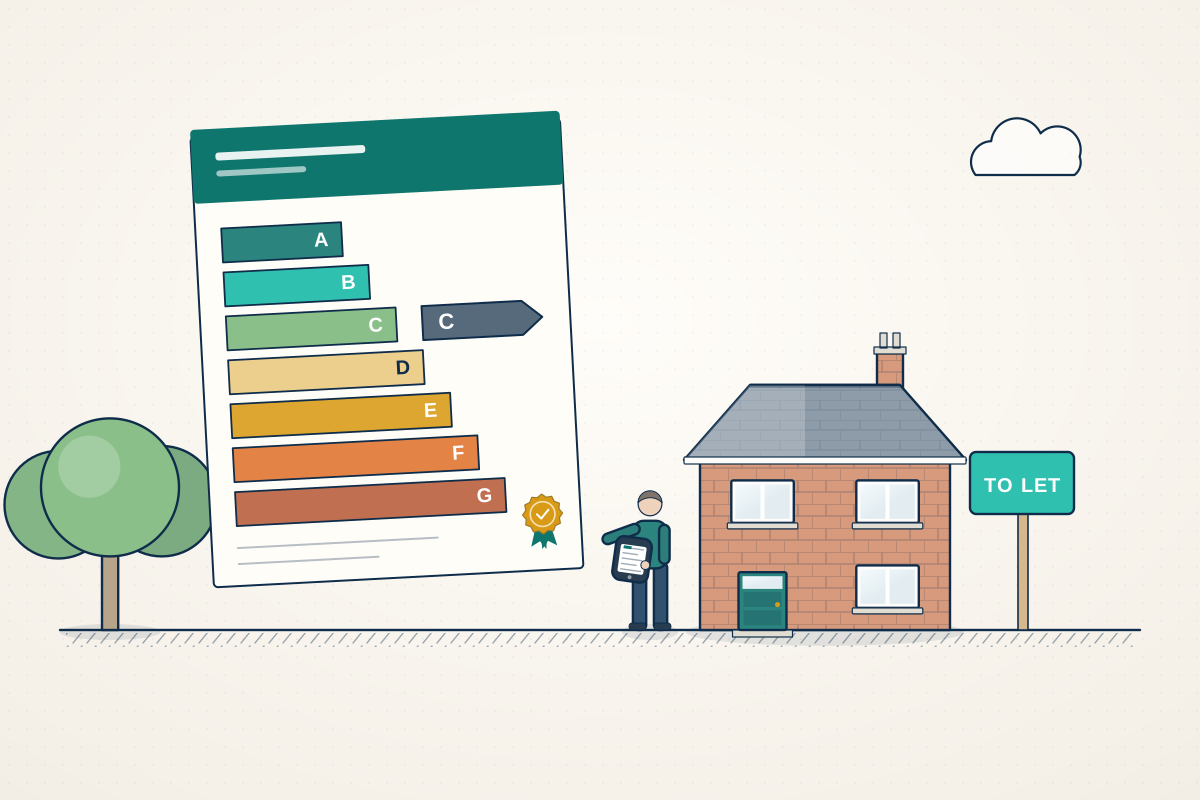
For homeowners, landlords, developers and businesses who need an Energy Performance Certificate to sell, let or complete a building. Compare quotes from accredited energy assessors who cover your area.
An Energy Performance Certificate rates a building’s energy efficiency from A to G and lists recommended improvements. You generally need one when a building is sold, let or newly built, and conversions that create new homes usually need one on completion too. Existing homes are assessed by a domestic energy assessor during a site visit, new homes get an on-construction EPC based on the final SAP calculations, and commercial buildings are assessed by a non-domestic assessor accredited at a level that matches the building’s complexity. A good assessor records the building carefully, asks for evidence of hidden improvements such as wall or floor insulation, and explains what the recommendations would mean in practice.
How a professional can help
- Domestic EPCs for selling or letting: An assessor visits to record the home’s construction, insulation, windows, heating, hot water and lighting, then produces the certificate and lodges it on the official register.
- On-construction EPCs for new homes: For new builds and conversions that create new homes, an on-construction assessor produces the EPC from the final SAP calculations, ready for completion and sign-off.
- Commercial EPCs: A non-domestic assessor at the right level assesses offices, shops, warehouses and mixed-use premises, taking account of their heating, cooling, ventilation and lighting systems.
- Making sense of the rating: They explain what drives your rating and which recommended improvements are realistic for your building, rather than leaving you with a list of generic suggestions.
- Evidence that improves accuracy: They tell you which paperwork helps, such as insulation installation records, boiler details or window invoices, because hidden improvements without evidence may be assumed from the building’s age.
- Letting requirements: For landlords, they explain how the rating relates to the minimum standards for letting and which improvements, or registered exemptions, might apply.
Is this right for you?
- You’re selling or letting a home and need an EPC before it goes on the market.
- You’re a landlord checking whether your property meets the minimum energy standard for letting.
- You’ve built a new home or converted a building into flats and need an on-construction EPC.
- You’re selling, letting or fitting out a commercial unit and need a non-domestic EPC.
- You’ve made energy improvements and want an updated rating that reflects them.
How the project usually runs
- Check what you need: Confirm whether the building needs a domestic, on-construction or non-domestic EPC, and check the register to see whether a valid certificate already exists.
- Gather information: Collect plans, SAP calculations for new builds, and evidence of insulation, heating, windows and renewables, so the assessor doesn’t have to rely on default assumptions.
- Assessment: For existing buildings the assessor visits to measure and photograph the property and its systems; on-construction EPCs are based on the as-built design and supporting evidence.
- Certificate lodged: The assessor calculates the rating, lodges the certificate on the official register and sends you a copy, together with the recommendations for improvement.
- Act on the results: Use the recommendations to plan improvements, meet letting requirements or answer buyers’ questions, and consider a new EPC once significant upgrades are complete.
What affects the cost
- Whether you need a domestic, on-construction or non-domestic EPC.
- The size of the property and, for commercial buildings, how complex the heating, cooling and ventilation systems are.
- How many units need certificates, such as several flats in one building.
- Whether plans and evidence are ready, or the assessor needs to measure and investigate more on site.
- The location, access to the property and how quickly you need the certificate.
EPC rules across the UK
- EPCs are generally needed when a building is sold, let or built. The rules are broadly similar across the UK but differ in detail between England and Wales, Scotland and Northern Ireland.
- In England and Wales, most privately rented homes must meet a minimum EPC rating unless a valid exemption is registered. The required rating can change, so check the current position.
- Commercial lettings in England and Wales also have minimum energy efficiency standards, and Scotland has its own EPC rules, including where certificates must be displayed.
- Some buildings, such as certain listed buildings and temporary structures, may not need an EPC. This isn’t automatic, so check with an assessor.
Questions people ask
How long does an EPC last?
EPCs are valid for a fixed period, so check the official register for the expiry date of any existing certificate on your property. Even a valid EPC may not reflect improvements you’ve made since it was produced, in which case a new assessment could give a more accurate rating. Your assessor can confirm whether you need a new one.
What happens during a domestic EPC visit?
The assessor walks through the home measuring rooms and recording the walls, roof, floors, windows, heating, hot water, controls and lighting, usually taking photographs. They’ll want to look in the loft and at the boiler. You don’t need to prepare much beyond giving access and having any evidence of improvements to hand.
Can I improve my EPC rating?
Usually, yes. Common improvements include loft and wall insulation, more efficient heating and controls, low-energy lighting, better glazing and solar panels. The recommendations on the certificate suggest measures for your home. Before investing, get advice on which improvements suit the building, particularly in older homes where some insulation types can cause damp.
Why does my EPC say my walls aren’t insulated when they are?
If insulation is hidden and there’s no visible sign or paperwork, assessors may have to assume what’s typical for the age of the building. Providing installer certificates, warranties or invoices can let them record what’s really there. Ask the assessor before the visit what evidence they can accept.
Do I need an EPC for a new build or conversion?
Yes. New homes need an on-construction EPC, produced from the SAP calculations once the work is finished, and conversions that create new homes generally need one too. It forms part of the information handed over at completion and must be given to the owner. The assessor who prepared the SAP calculations can often produce it.
What’s the difference between a domestic and a commercial EPC?
Domestic EPCs cover homes and use an assessment method designed for dwellings. Non-domestic EPCs cover offices, shops, industrial units and similar buildings, use a different calculation and are graded by building complexity, so the assessor must be accredited at the right level. Mixed-use buildings may need both types.
Available across the UK
Professionals cover the whole of the UK: England, Scotland, Wales and Northern Ireland. Planning and Building Regulations differ between the four nations, and your professional will work to the rules that apply where your property is.