Get the licence for a crane or scaffold that crosses next door
For builders and homeowners whose crane will swing over, or whose scaffold will stand on or overhang, a neighbour’s property. Compare quotes from surveyors who arrange licences.
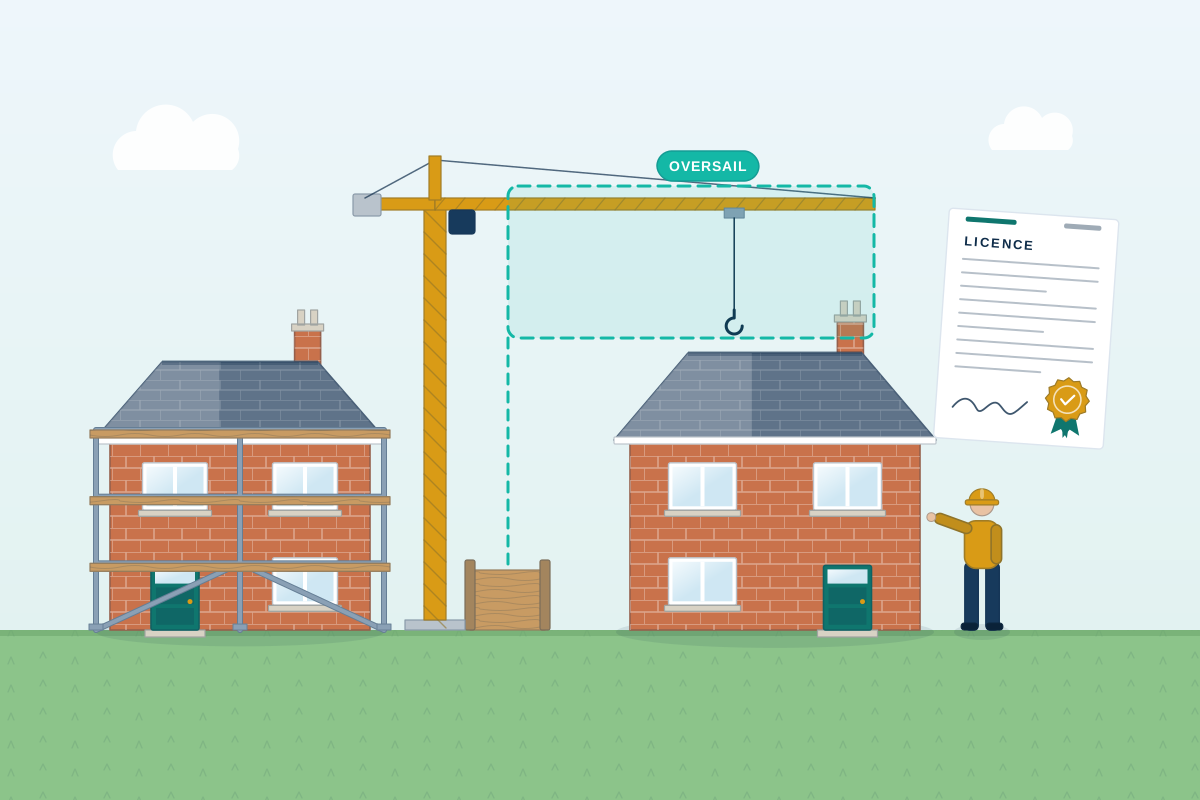
A crane jib that swings over a neighbour’s roof, known as oversail, uses their airspace. A scaffold whose boards or netting overhang their garden does the same, and a scaffold standing on their land uses the land itself. Both need the owner’s agreement, usually a short written licence, which is written permission. It says where, when and for how long, what insurance is in place and how the crane is run safely. This is different from party wall notices, which deal with the shared wall. Cranes and scaffolds over a pavement or road are a separate matter for the highway authority, usually the council, which grants highway licences.
How a professional can help
- Working out what the licence must cover: They check where the crane will stand, the swing of its jib and the scaffold lines, and which neighbouring properties are crossed, so every owner who needs to agree is identified before the crane is booked.
- Drawing up the oversail licence: A licence sets out the area of airspace, the heights, dates and working hours, and conditions such as no lifting of loads over the neighbour’s property unless agreed. Both owners sign it.
- Scaffold licences for a neighbour’s land: Where a scaffold must stand on a neighbour’s land, or overhang it, the licence covers the footprint, ground protection, access for putting it up and taking it down, and what happens if it stays longer than planned.
- Insurance and indemnity: They ask for the contractor’s public liability insurance details to be shared with the neighbour, and for an indemnity, a written promise to cover the cost of any damage, to be included in the licence.
- Safety, lift plans and wind: They ask for the crane contractor’s lift plan, prepared by the person responsible for planning the lifts, and for the arrangements when the crane is out of use or the wind is high, as neighbours will want to see these.
- The highway side: If a crane or scaffold will stand on or oversail the pavement or road, they explain that a separate licence from the highway authority, usually your council, is needed, and what that application usually asks for.
Is this right for you?
- A tower or mobile crane on your site will swing over a neighbour’s roof or garden at some point.
- Your scaffold must stand on, or hang over, next door’s land to reach the work.
- You’re a neighbour asked to sign a licence and want to check the terms, insurance and safety arrangements.
- You’re a developer or builder preparing site set-up and need neighbours’ agreements in place before the crane arrives.
How the project usually runs
- Plan the lifts and the scaffold: The builder or crane contractor produces a site layout showing the crane position, jib reach and scaffold lines. The surveyor uses it to see which neighbours are crossed, and at what height.
- Show each neighbour the swing and the dates: Each affected owner receives a drawing of the jib’s reach and the heights over their roof or garden, the dates and a draft licence, with time to read it and take advice.
- Agree terms and insurance: Both sides settle working hours, protection for the neighbour’s property, insurance and the indemnity wording, plus any contribution to the neighbour’s costs. A solicitor can finalise the licence.
- Sign and share the safety plan: The licence is signed before the crane or scaffold arrives. The neighbour receives the lift plan and the out-of-service arrangements, plus a contact for problems on the day.
- During and after: The crane and scaffold are used within the licence. Afterwards the neighbour’s land is checked and any damage made good, ideally against a record taken before the work.
What affects the cost
- How many neighbouring properties the crane or scaffold crosses, as each owner needs a licence.
- How long the crane or scaffold will be in place.
- Any contribution the neighbour asks for towards their own advice and the inconvenience.
- The insurance and safety documents the neighbour needs to see, and whether the contractor has them ready.
- Whether a highway licence from the council is needed as well.
Licences, the Act and the highway
- A crane jib or scaffold over someone else’s land needs their agreement. The Party Wall etc. Act 1996 (England and Wales) does not cover crane oversail, and its right of entry is limited to the work it covers, so a licence is usually needed.
- Property law differs in Scotland and Northern Ireland, so local advice matters there. Surveyors work across the whole UK.
- Scaffolds, hoardings and cranes over pavements and roads need a licence from the highway authority, usually your council (in Northern Ireland, the Department for Infrastructure). Apply early, as authorities work to their own timescales.
- Heavy lifting needs a proper lift plan and a competent crane operator. These are safety requirements, separate from planning and Building Regulations.
Questions people ask
Do I need permission for a crane to swing over my neighbour’s roof?
In practice, yes. A crane swinging over a neighbour’s land needs their agreement, normally a written oversail licence. Even with no load on the hook, the jib may pass over. Ask early, show the plan and agree terms such as insurance and working hours.
Is an oversail licence part of the party wall award?
Not normally. A party wall award is the surveyors’ document for work to shared walls and nearby excavations under the Party Wall etc. Act 1996, and it does not cover cranes. A surveyor can set out the licence terms alongside the award or in a separate document. If the neighbour is already dealing with a surveyor, it is sensible to agree both together.
What happens if the crane stays longer than planned?
The licence should say how long it lasts and what happens if the programme slips, usually by asking for notice and, if agreed, an extension. Neighbours are more willing to agree when dates are realistic and delays are reported early, so build a little extra time into your first request.
Do I need a licence for scaffolding on the pavement outside my house?
Usually, yes. Scaffolding on or over a pavement or road is controlled by the highway authority, normally your council (a government department in Northern Ireland), which issues a licence and may set conditions such as lighting and pedestrian access. That is separate from any agreement with a neighbour. Your scaffolder may be able to apply for you, so ask them.
What if next door is a flat or a let property?
Then more people may need to agree. The freeholder or a management company often controls the airspace over a block, and tenants and managing agents should be told. Check who owns the roof or garden before you plan the lift. A surveyor can help identify the owners to approach and make sure each one signs a licence.
Available across the UK
Party wall surveyors cover the whole of the UK. The Party Wall etc. Act 1996 applies in England and Wales; Scotland and Northern Ireland have different rules, and a professional can tell you what applies to your property.
- Get free quotes
- Access to Neighbouring Land
- Scaffold, Crane Base and Temporary Works Design
- Party Wall Packages for Developers (Several Neighbours)
- Party Wall Advice Before You Build
- Boundary Disputes and Boundary Surveys
- Damage Claims and Making Good
- Neighbour Disputes and Expert Witness Reports
- Post-works Inspections
- Rights of Light Advice and Surveys
- Schedules of Condition
- All services
- Find your area