Get foundations designed for clay soil and trees close to your plot
For owners planning an extension or new building near shrinkable clay, a mature tree or a hedge. Tell us about the site and compare quotes from structural engineers who set the foundation depth and type.
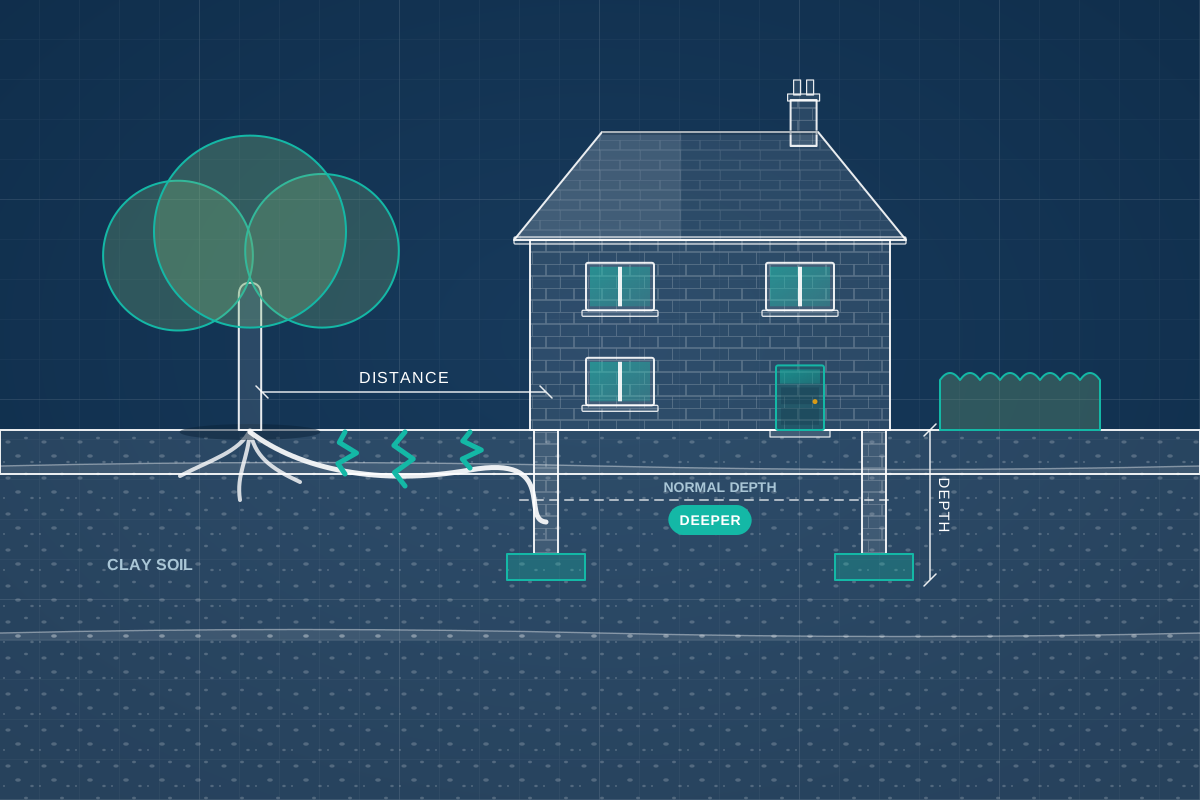
Clay soil swells when it is wet and shrinks when it is dry, and tree roots draw water out of it, especially in dry summers. If a foundation is too shallow, the ground beneath it can move and the building moves with it, which is a common cause of cracking. The usual answer is to take foundations deeper than standard footings, below the zone the roots affect, and in some cases to protect against clay swelling back after a tree is removed. A structural engineer works out the depth and type from the soil, the species and height of the trees and how far away they stand, and designs foundations your builder can dig and building control can accept.
How a professional can help
- Identifying shrinkable clay: Soil tests and trial pits show how the ground behaves, including a measure of how much the clay can shrink and swell. Not all clay moves by the same amount, so this decides how deep the foundations must go.
- Reading the trees: The engineer notes each tree’s species, height and distance from the new work, and whether it is a hedge, a mature tree or one planned for removal, because different trees draw different amounts of water.
- Setting the foundation depth: Using industry guidance such as the NHBC Standards, they set a depth that takes foundations below the soil the roots dry out, or choose a different type, such as piles, where digging that deep is not practical.
- Allowing for heave: Where trees have been removed, or will be, clay can slowly swell back. The engineer may specify a compressible layer or void former (a board or box that crushes as the clay swells) beside or beneath the foundations, so that swelling does not push them upwards.
- Piles and ground beams when trenches get too deep: Very deep trenches can be difficult and unsafe to dig, so the engineer may design piled foundations (columns driven or drilled deep into the ground) with a beam across the top as an alternative, and explains the trade-offs so you can decide.
- Drains and neighbouring trees: They look at where drains run and at trees on neighbouring land, which you cannot control, and may suggest working around them or asking a tree specialist for a report.
Is this right for you?
- You’re planning an extension or garden room and there is an oak, willow, poplar or other large tree close to the site.
- Your soil is clay, and building control or a warranty provider has said standard foundation depths are not enough.
- You have cut down a tree and want to know whether the clay could swell back under a new extension.
- You want builders to price foundations designed for your site, rather than guessing a depth.
How the project usually runs
- Site visit and tree survey: The engineer looks at the soil, the position, species and height of nearby trees and hedges, and any history of cracking in the existing house or neighbouring buildings.
- Soil tests: Trial pits and soil samples show what the ground is like at foundation depth and how much the clay can shrink and swell. Sometimes a tree specialist is asked to confirm the tree details.
- Foundation design: The engineer sets the depth and type of foundation, whether deep trench-fill (trenches filled with concrete), piles with beams, or a raft (a slab under the whole building), details any heave protection, and produces calculations and drawings.
- Approvals: The design goes to building control, or to your warranty provider where one is involved. Both may check it against guidance on building near trees before they accept it.
- Inspection on site: Because the depth depends on what is found, the engineer or building control inspects the trenches before concrete is poured, and the design is adjusted if the ground is not as expected.
What affects the cost
- How deep the foundations need to go, which affects excavation, concrete and the safety measures used in deep trenches.
- Whether trial pits, soil tests or a tree report are needed to establish the facts.
- Whether piled or beam-and-pile foundations are used instead of deep trench-fill.
- Whether heave protection, such as compressible material or void formers, is needed.
- The number and type of trees and hedges close to the site, including those on neighbouring land.
- Whether the foundation depth is fixed in advance, or has to be confirmed when the trenches are open.
Trees, approvals and who checks the design
- Building control checks the foundations of most building work, and warranty providers for new homes often have their own rules about building near trees. These differ across England, Scotland, Wales and Northern Ireland, so ask which apply. Engineers work across the whole UK.
- Trees can be protected by a tree preservation order or by standing in a conservation area, so check with your council before pruning or removing any tree. Removing a tree is not always the answer either, as clay can swell back.
- If the new foundations will be deeper than a neighbour’s and close to their building, a notice of adjacent excavation under the Party Wall etc. Act 1996 may be needed in England and Wales.
- Your engineer can say whether extra investigation is needed, such as soil tests or a tree report from an arboriculturist.
Questions people ask
Why does clay soil cause foundation problems?
Clay takes up water and swells in wet weather, then dries and shrinks in dry spells. Trees and hedges speed up the drying because their roots draw water from the soil. Foundations that are too shallow move with the clay, and that movement can crack walls. Deeper foundations reach more stable ground.
How close is too close for a tree?
There is no single answer. It depends on the soil, the type of tree, its height and whether it is mature, which is why engineers use tables in guidance such as the NHBC Standards and then check against the site. A large tree is generally a greater concern than a small one, and the closer it stands, the more it matters.
Should I remove the tree to be safe?
Not necessarily. Taking out a tree can let the clay swell back over the following years, which can lift foundations, so removal is not a simple fix. Protected trees also generally need the council’s consent before they are cut. Ask your engineer and, where relevant, a tree specialist before deciding.
What does heave protection mean?
It is a layer or void, such as a compressible board, placed beside or under foundations and floors so that swelling clay has room to expand without pushing the building upwards. It is only needed where the design calls for it, for example where trees have recently been removed.
Can my builder simply dig the trenches deeper?
Deep trenches need a design and safe working methods, because they can collapse and affect neighbouring buildings. The engineer sets the depth, the concrete and the checks, and may suggest piles where trenches would be very deep. Your builder should dig only to the depth shown and have it inspected before concreting.
Available across the UK
Professionals cover the whole of the UK: England, Scotland, Wales and Northern Ireland. Planning and Building Regulations differ between the four nations, and your professional will work to the rules that apply where your property is.
- Get free quotes
- Foundation Design (Strip, Trench-fill, Raft)
- Piled and Mini-piled Foundations
- Arboricultural Reports
- Ground Investigations and Soil Surveys
- Basement and Cellar Structural Design
- Basement Impact Assessments and Ground Movement
- Basement Lowering and Floor Lowering
- Ground-floor Slab Design
- Retaining Wall Design
- Underpinning Design
- All services
- Find your area