Test your plans with the council through pre-application advice
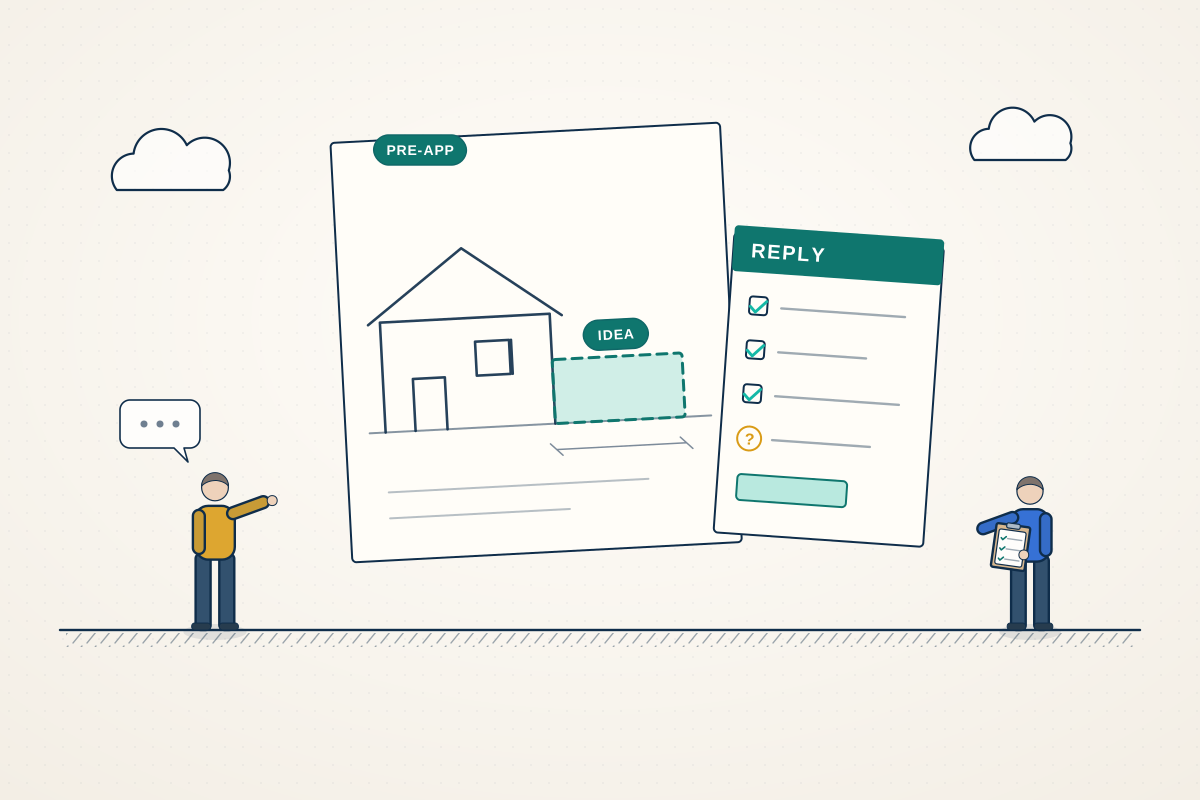
For homeowners, landlords and developers who want an early steer from the planning department. Compare quotes from professionals who can prepare your pre-app request and present your design clearly.
Pre-application advice, often called a pre-app, is an informal discussion with your council’s planning team before you submit an application. You send sketch drawings and a short explanation of what you want to build, and a planning officer responds in writing, sometimes after a meeting or a site visit. It’s most useful when the outcome is uncertain: a larger extension, a new home in a garden, a change of use, or work in a conservation area or to a listed building. A good professional checks the planning history and local policies first, presents the proposal clearly and fairly, asks the questions that matter, and then helps you decide how to respond to what the council says.
How a professional can help
- Researching the planning history: They look up past applications on your property and nearby, the local plan policies that apply, and constraints such as conservation areas, tree preservation orders or flood zones.
- Preparing sketch proposals: They draw the scheme at a level of detail the officer can judge, showing its size, height and relationship to neighbours, without the cost of a full drawing set.
- Writing the supporting note: A short statement explains what you want to do, why the design suits the site, and the specific questions you want the council to answer.
- Attending the meeting: Where the council offers a meeting or site visit, your professional can present the scheme, discuss concerns with the officer and keep a note of what was said.
- Interpreting the response: Council letters are often cautiously worded. Your professional explains what the officer is really asking for, and which points look like firm objections and which are open to negotiation.
- Revising before you apply: They adjust the design in response to the feedback, so your formal application tackles the issues the council has already raised.
Is this right for you?
- You’re not sure whether the council will accept the size or style of what you want to build.
- Your property is listed, in a conservation area, or has a refused application in its history.
- You’re planning something larger, such as a new dwelling, flats or a change of use, and want to reduce risk before paying for full drawings.
- You’d like to know which reports, such as ecology or flood risk, the council will expect with your application.
How the project usually runs
- Site and policy check: Your professional reviews the property, its planning history, the local plan and any designations, and tells you whether a pre-app is worth it for your scheme.
- Sketch scheme and questions: They prepare scaled sketch drawings, photos and a short statement, and set out the questions you want the planning officer to answer.
- Request sent to the council: The request goes in through the council’s pre-application service, often with a fee payable to the council, and an officer is allocated to it.
- Meeting and written advice: Depending on the council and the level of service chosen, there may be a meeting or site visit before the officer sends written feedback on the proposal.
- Refine and decide: You and your professional weigh up the advice, revise the design if needed, and decide whether to apply, try a different approach or pause the project.
What affects the cost
- How developed the proposal needs to be: one sketch option takes less work than several alternatives or detailed massing studies.
- Whether your professional attends a meeting or site visit with the planning officer, or the request is dealt with in writing only.
- Any fee charged for the council’s pre-application service, which is separate from your professional’s fee and depends on where you are and the type of scheme.
- How sensitive the site is, for example heritage, trees, flooding or overlooking issues that need extra research or specialist input.
- Whether you also want help revising the design and preparing the full application afterwards, or only the pre-app itself.
How pre-application advice fits into planning
- Pre-application advice is informal: it isn’t a planning decision and doesn’t bind the council when it later decides your application.
- Pre-app services, forms, fees and levels of service vary between councils and between the UK nations, so check your council’s website.
- For larger developments, some UK nations require formal community consultation before an application can be submitted. Your professional can confirm whether that applies.
- Ask whether your request and the council’s response will be kept confidential, as councils handle this differently.
Questions people ask
Is the council’s pre-application advice binding?
No. It’s the planning officer’s informal view based on what they’ve seen, and the decision is made later on the formal application, after neighbours and consultees have had their say. Advice can also change if local policies change in the meantime. Even so, a positive response that you’ve followed closely gives you a much clearer picture of where you stand.
Is a pre-app worth it for a small house extension?
Often not, if the extension is modest and similar to others already approved on your street. It’s more useful when there’s real doubt: a large or unusual design, a sensitive site, a previous refusal or a tricky relationship with a neighbour. Your professional can look at recent decisions nearby and tell you whether pre-application advice is likely to add value.
How detailed do the drawings need to be?
Detailed enough for the officer to understand the scale, position and appearance of the proposal. That usually means scaled sketch plans, elevations and a site plan, plus photos, rather than a full planning drawing set. Too little information tends to produce vague advice, so it’s worth presenting the scheme clearly.
Will my neighbours find out about my pre-application request?
Councils don’t normally consult neighbours at pre-application stage; that happens when you submit a formal application. Some councils publish pre-app correspondence later, or may release it if someone asks under information access laws, so check how your council handles confidentiality. Talking to neighbours yourself early on can help, especially if the work is close to the boundary.
What happens if the council’s feedback is negative?
You still have choices. Your professional can explain the reasons behind the advice and suggest changes, such as reducing the height, moving the extension or changing materials. You can ask for further advice on a revised scheme, or apply anyway if you believe the proposal meets policy, although going against the officer’s advice carries a higher risk of refusal.
Available across the UK
Professionals cover the whole of the UK: England, Scotland, Wales and Northern Ireland. Planning and Building Regulations differ between the four nations, and your professional will work to the rules that apply where your property is.
- Get free quotes
- Feasibility Studies
- Planning Consultants
- Planning Drawings
- Householder Planning Applications
- 3D Architectural Visualisation
- Accessible Home Design and Adaptations
- Architectural Drawings
- Architectural Project Management
- Balconies and Roof Terraces
- Building Regulations Drawings
- Garage Conversions
- All services
- Find your area