Change how your property is used, with the right permission in place
For owners, buyers and tenants turning a shop, office, barn, house or other building to a new use. Compare quotes from professionals who can check what’s allowed and handle the application.
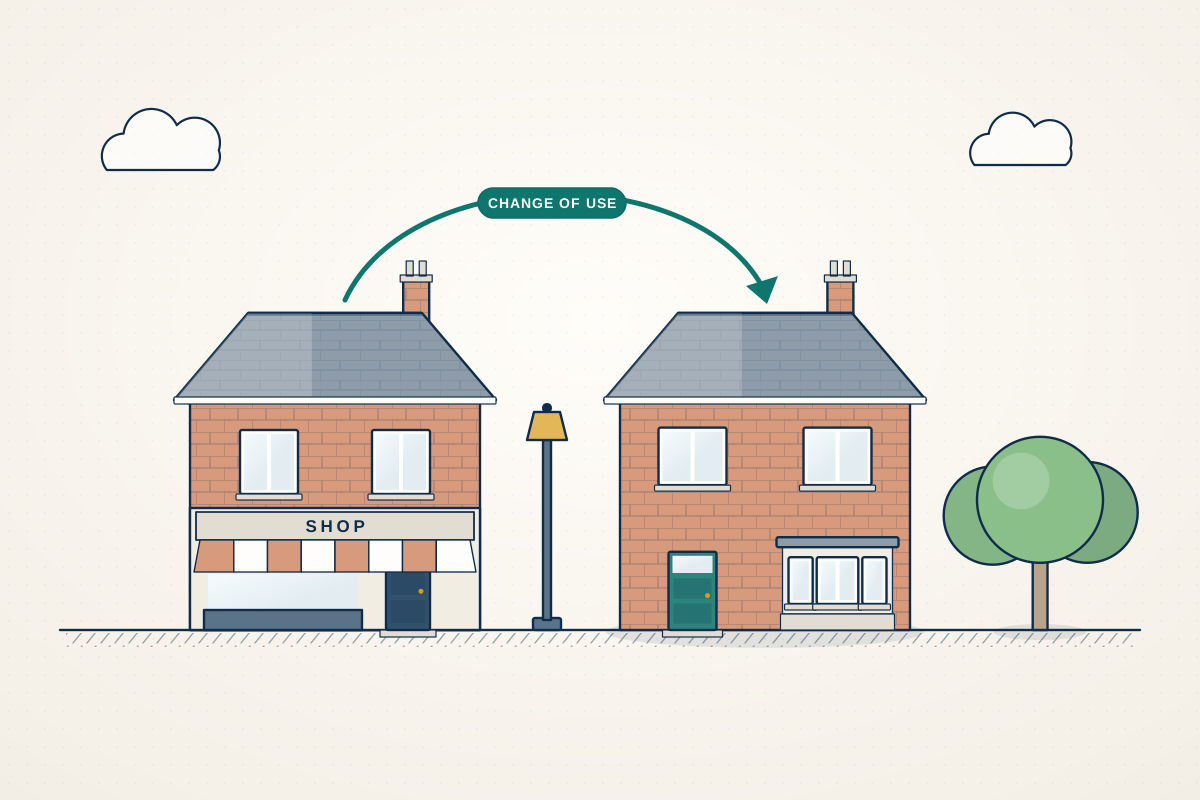
A change of use is when a building or land starts being used for a different purpose, such as a shop becoming a flat, a family house becoming a house in multiple occupation, or offices becoming homes. Some changes need no application at all, some are allowed under permitted development through a prior approval, and others need full planning permission. A good professional identifies the current lawful use, checks which rules apply to the new one, flags any conditions or Article 4 directions that could get in the way, and sets out the Building Regulations work the change is likely to trigger.
How a professional can help
- Establishing the lawful use now: They look at the planning history, past permissions and how the building has actually been used, because the starting use decides which changes are possible and on what terms.
- Checking use classes and permitted changes: They identify the use class of the current and proposed uses under your nation’s rules, and whether the change stays within one class, is covered by permitted development or needs an application.
- Prior approval submissions: Where a permitted change applies, they prepare the prior approval submission, covering the matters the council may consider, such as transport, noise, flooding, contamination and natural light.
- Full applications for the new use: When permission is needed, they prepare plans, a planning statement and supporting evidence, such as parking and bin storage, marketing evidence for lost business space, or room sizes for new homes.
- Layouts that meet the regulations: A change of use often brings new Building Regulations requirements, so they plan fire separation, escape routes, sound insulation, ventilation and energy performance into the layout from the start.
- Other consents and licences: They flag where you may also need listed building consent, an HMO licence, premises licensing, advertisement consent for signs, or your landlord’s consent under the lease.
Is this right for you?
- You’re buying or leasing a building and want to know whether your intended use is allowed before you commit.
- You want to convert commercial space, such as a shop, office or pub, into one or more homes.
- You run, or plan to run, a business from premises whose authorised use is something different.
- You’ve been told a new use needs prior approval or planning permission and want help preparing the application.
How the project usually runs
- Use and history check: Your professional confirms the current lawful use, reviews past permissions and conditions, and checks for Article 4 directions or other restrictions affecting the building.
- Choose the route: They advise whether the change needs no application, a prior approval, a certificate of lawfulness for certainty, or full planning permission, and explain what each involves.
- Survey and layout: The building is surveyed and the new layout designed, covering room sizes, daylight, escape routes, bins, bikes and parking, along with any outside changes such as windows or shopfronts.
- Application and assessment: The application or prior approval submission goes to the council with its supporting reports, and the council consults neighbours, highways and other bodies before it decides.
- Building control and fit-out: With approval, technical drawings are prepared for Building Regulations, any conditions are discharged, and the conversion work is priced by builders and carried out.
What affects the cost
- The current and proposed uses, and whether the change needs no application, a prior approval or full permission.
- The size of the building and how many homes, units or separate spaces the new use creates.
- Reports needed to support the case, such as noise, transport, flood risk, daylight or marketing evidence.
- Any outside alterations, such as new windows, entrances, shopfronts or extensions, that need designing at the same time.
- Whether the building is listed, in a conservation area or affected by an Article 4 direction.
- How much technical design you need afterwards for Building Regulations and the fit-out.
Use classes, permitted changes and Building Regulations
- Each UK nation has its own use classes system, so a change that’s straightforward in England may need permission in Wales, Scotland or Northern Ireland.
- In England, many shops, cafés, offices, gyms and clinics share one commercial class, Class E, so moving between them may not need an application unless a condition says otherwise.
- Permitted changes of use often come with a prior approval step, and Article 4 directions can remove them in particular areas.
- Creating new homes, and some other changes of use, bring Building Regulations requirements for fire safety, sound and energy, even where planning permission isn’t needed.
Questions people ask
Do I need planning permission to change the use of a building?
Not always. A change within the same use class isn’t development, and some changes between classes are allowed under permitted development, often subject to prior approval. Others need full planning permission. The answer depends on your nation, the current lawful use, conditions on past permissions and whether local directions remove rights. A professional can check your building and, if you want certainty, apply for a certificate confirming the change is lawful.
What is prior approval for a change of use?
In England, it’s a lighter process than a full planning application, used for certain changes allowed under permitted development. The council can only consider specific matters set out in the rules, such as transport, flooding, noise, contamination or light, rather than whether it likes the change in principle. Missing or weak information can still lead to refusal, so a well-prepared submission matters.
Can I convert a shop or office into flats?
Often, yes, but the route varies. In England, some commercial buildings can become homes under permitted development with prior approval, subject to conditions and exclusions that depend on the building and where it is, and the new homes must meet national space standards. Elsewhere, or where those rights don’t apply, a full application is needed. Either way, the layout needs careful design to meet Building Regulations and give each home enough light and space.
Do I need Building Regulations approval for a change of use?
Usually, if new homes or certain other uses are created. In England and Wales, changes such as creating a dwelling, a flat or a hotel count as a material change of use under the regulations, even if little building work is planned. Scotland and Northern Ireland have their own building standards systems. Parts of the building may need upgrading for fire safety, sound insulation, ventilation or energy efficiency.
What if the building has been used differently for years without permission?
If a use has gone on continuously for long enough without enforcement, it may have become lawful. The time limits differ between nations and changed in England in 2024, so get advice on which apply to you. You can then apply for a certificate confirming the existing use is lawful, backed by evidence such as tenancy agreements, business records and dated photos.
Available across the UK
Professionals cover the whole of the UK: England, Scotland, Wales and Northern Ireland. Planning and Building Regulations differ between the four nations, and your professional will work to the rules that apply where your property is.
- Get free quotes
- Commercial to Residential Conversions
- Prior Approval Applications
- Lawful Development Certificates
- HMO Conversions
- Conservation Area Projects
- Design and Access Statements
- Discharge of Planning Conditions
- Full Planning Applications
- Heritage and Conservation Architects
- Heritage Statements
- Householder Planning Applications
- All services
- Find your area