Extend or improve your property in a conservation area
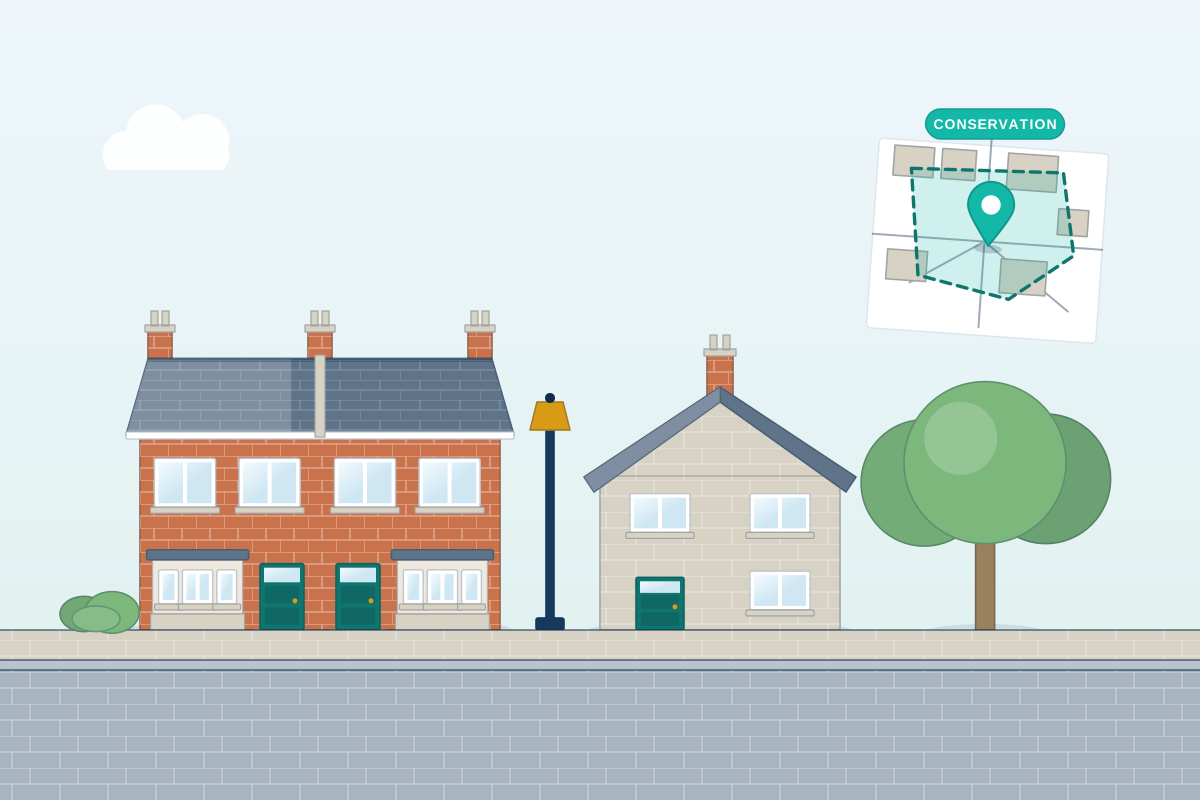
For owners of homes and buildings in conservation areas planning extensions, new windows, roof changes or new buildings. Compare quotes from professionals who understand historic settings.
Conservation areas are places your council has designated for their special architectural or historic interest, such as a Victorian terraced street, a village centre or a planned estate. The buildings themselves may not be listed, but the council aims to preserve or enhance the area’s character, so permitted development rights are reduced and applications are judged on how they fit in. A good professional reads the council’s conservation area appraisal and design guidance, looks at how the street and neighbouring buildings are put together, and designs changes with fitting materials, proportions and details, explaining the approach in a heritage statement.
How a professional can help
- Checking which rights you’ve lost: They confirm which permitted development rights apply in your conservation area and whether an Article 4 direction removes more, such as changes to windows, doors, roofs, porches or front boundaries.
- Reading the local character: They study the council’s appraisal, management plan and design guides, plus the materials, rooflines, window patterns and spacing that define your street, so the design responds to them.
- Designs that sit comfortably: Whether traditional or contemporary, they shape extensions, dormers and new buildings to suit the area, paying close attention to scale, materials and how much is visible from the street.
- Heritage statements: They prepare a statement explaining the area’s significance and how the proposal preserves or enhances its character or appearance, which councils usually expect with applications in conservation areas.
- Demolition and trees: They advise on consent for demolition, which works differently across the UK nations, and on giving the council notice before work to trees, and bring in a tree specialist where needed.
Is this right for you?
- Your home is in a conservation area and you want to extend, add a dormer, or change windows or doors.
- You’ve found that work you assumed was permitted development needs planning permission because of the conservation area.
- You want to replace an unsympathetic building, or build a new one, in a historic street.
- You run a business in a conservation area and want to change your shopfront or signs.
How the project usually runs
- Check the designation and rules: Your professional confirms the conservation area boundary, any Article 4 directions and the council’s appraisal and guidance, and checks whether the property or its neighbours are listed.
- Survey and context study: The property is measured, and the surrounding street is photographed and analysed for the materials, building lines, roof forms and details the design should respond to.
- Design and conservation advice: Design options are developed and, where helpful, discussed with the council’s conservation or design officer before an application is made.
- Application with heritage statement: The application goes in with drawings that show materials and details clearly, plus a heritage statement. Conditions may require samples of brick, stone, slate or joinery before work starts.
- Detail and delivery: Approved details are worked into technical drawings and a specification, so your builder knows exactly which materials and finishes the council expects.
What affects the cost
- The type of work, from replacement windows to an extension or a new building.
- How much analysis of the street and surrounding buildings the council expects to see.
- Whether an Article 4 direction means an application is needed for otherwise minor work.
- The level of detail needed for materials, joinery and junctions, including large-scale drawings.
- Specialist input, such as a tree survey, a heritage consultant or a structural engineer.
Conservation area rules and consents
- Permitted development rights are more limited in conservation areas, and the limits differ between England, Scotland, Wales and Northern Ireland.
- An Article 4 direction can remove further rights for particular streets or properties, so check your council’s website or ask its planning team.
- In England, demolishing a building in a conservation area is controlled through planning permission; Scotland, Wales and Northern Ireland still use a separate conservation area consent.
- Most work to trees in a conservation area needs advance notice to the council, giving it the chance to protect them.
Questions people ask
Can I replace my windows in a conservation area?
It depends. In England, replacing a house’s windows can be permitted development if the new ones look similar to the old, but an Article 4 direction can remove that right, and flats, commercial buildings and the other UK nations have different rules. Councils often prefer timber in traditional patterns on front elevations, so confirm the position for your property first.
Do I need planning permission for an extension in a conservation area?
Often, yes. In England, permitted development rights for extensions are more restricted in conservation areas, for example for side extensions, cladding and roof enlargements, so more projects need an application. Other nations have their own limits. Even where some rights remain, the rules are detailed, so it’s worth having a professional check, or applying for a certificate of lawfulness for certainty.
Will the council insist on a traditional design?
Not necessarily. Many councils accept well-designed contemporary extensions and new buildings in conservation areas, provided the scale, materials and detail respect their surroundings. What matters is the effect on the area’s character and appearance. Your professional can advise on what your council’s guidance and past decisions suggest.
Can I put solar panels on a house in a conservation area?
Often, though there are extra limits. In England, panels on a roof can often be installed without an application, but panels on a front wall facing a road in a conservation area need permission, and an Article 4 direction may remove more rights. Other nations have their own rules, and listed buildings need separate checks, so confirm with your council or professional.
What is a conservation area appraisal?
It’s a document many councils publish describing what makes a conservation area special, such as its history, building types, materials, views and open spaces, and sometimes identifying features that harm it. Planning officers use it when assessing applications, so a design that responds to it starts on firm ground.
Available across the UK
Professionals cover the whole of the UK: England, Scotland, Wales and Northern Ireland. Planning and Building Regulations differ between the four nations, and your professional will work to the rules that apply where your property is.
- Get free quotes
- Heritage Statements
- Permitted Development Advice
- Arboricultural Reports
- Period Property Renovation
- Change of Use
- Design and Access Statements
- Discharge of Planning Conditions
- Full Planning Applications
- Heritage and Conservation Architects
- Householder Planning Applications
- Lawful Development Certificates
- All services
- Find your area