Split your house into self-contained flats with the right consents
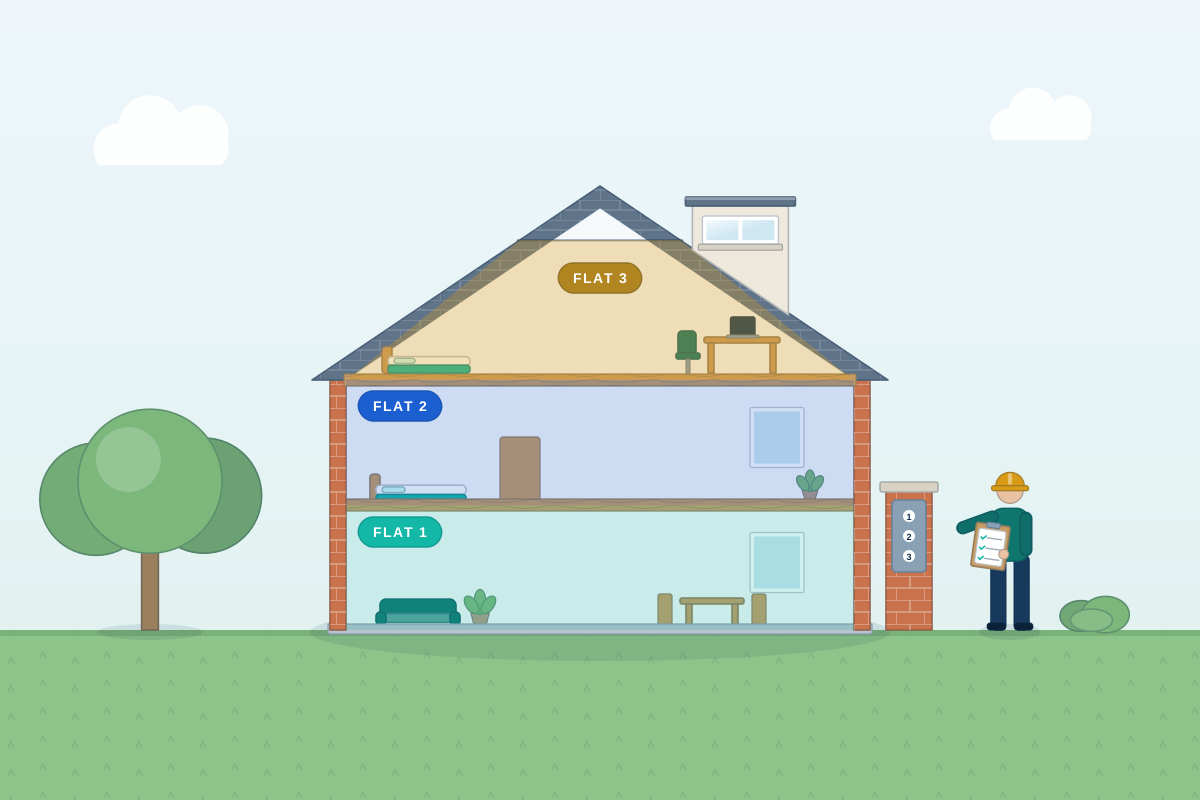
For owners and investors dividing a house or large building into flats. Compare quotes from professionals who can test how many flats will work, apply for planning and design fire and sound separation.
Converting a house into flats turns one home into two or more self-contained dwellings, each with its own front door, kitchen and bathroom. It’s common with large Victorian and Edwardian houses, wide plots and homes with big lofts or basements. The project needs planning permission, and the Building Regulations treat creating flats as a material change of use, so fire separation, sound insulation, ventilation and energy standards all apply. A good professional tests what the council will accept on flat sizes, unit mix, bins and bikes, then designs layouts that stack sensibly, keep plumbing and escape routes simple, and can be approved by building control.
How a professional can help
- Testing how many flats will work: They check the council’s policy on conversions, any space standards it applies, and the size and shape of the building, to show realistic options for the number and mix of flats.
- Stacking and circulation: Kitchens and bathrooms are placed above one another where possible, and a shared entrance and stairs are planned so every flat has a safe route out and its own front door.
- The planning application: Floor plans, elevations and any statements the council needs, covering outlook, daylight, private amenity space, bins, bikes and parking, so the case for the conversion is clear.
- Fire and sound separation: Floors and walls between flats are detailed to meet fire resistance and sound insulation requirements, often the hardest part of converting older buildings with timber floors and lath and plaster ceilings.
- Services for each flat: They plan separate heating, hot water and meters for each flat, new drainage runs and ventilation, and flag where the incoming water, gas or electricity supplies may need upgrading.
- Pricing and completion: Detailed drawings and a specification let contractors price the same scheme, and your professional can help with sound testing, building control sign-off and the information your solicitor needs for each flat.
Is this right for you?
- You own a large house that would work better as two or more flats to live in, let or sell.
- You’re buying a property to convert and want to know how many flats the council is likely to accept.
- You want to turn a basement or top floor into a separate flat while keeping the rest as your home.
- You have planning permission for a conversion and now need Building Regulations drawings.
How the project usually runs
- Policy and capacity check: Your professional reviews local policy on conversions and family homes, any space standards and parking rules, and the building itself, to agree a realistic number and mix of flats.
- Measured survey and layout options: Accurate drawings of the existing building are prepared, then layout options are tested for room sizes, daylight, stair access, stacking of bathrooms and space for bins and bikes.
- Planning application: The preferred scheme is submitted with plans, elevations and supporting statements, and your professional responds to the case officer and any neighbour or highways comments.
- Building Regulations design: Fire separation, escape routes, sound insulation, ventilation, energy upgrades and structural changes are detailed and approved before work starts, often with input from a structural engineer.
- Conversion, testing and completion: The builder carries out the work, sound insulation testing is done where required, building control issues a completion certificate, and new addresses and utility accounts are set up for each flat.
What affects the cost
- The number of flats and how much the layout changes, from splitting floors as they are to a complete internal rebuild.
- How the existing building is constructed, as older timber floors and shared walls often need more work for fire and sound separation.
- Whether extensions, a loft conversion or a basement are part of the scheme.
- Council policies on conversions, space standards and parking, which may call for extra justification or reports.
- Whether you need structural, acoustic, fire or drainage specialists alongside your designer.
- How far the professional’s role extends, from planning drawings only to tender, inspections and completion.
Planning and Building Regulations for flat conversions
- Dividing a house into two or more homes needs planning permission, and many councils have policies protecting family-sized housing. Rules and policies differ across the UK nations and between councils.
- The Building Regulations treat creating flats as a material change of use, so fire safety, sound insulation, ventilation and energy standards apply to the converted building. In Scotland you need a building warrant.
- In Wales, new flats created by conversion need an automatic fire suppression system such as sprinklers.
- If the work affects a wall shared with a neighbour, the Party Wall etc. Act 1996 may apply in England and Wales, and your solicitor should advise on leases and titles for the new flats.
Questions people ask
Do I need planning permission to convert a house into flats?
Yes, in almost every case. Turning one dwelling into two or more is treated as development that needs planning permission, even if you don’t change the outside of the building. Councils look at the size of each flat, the loss of a family home, parking, amenity space and the effect on neighbours. Policies vary a lot between councils, so a professional who checks local policy first can help you avoid designing a scheme the council is unlikely to accept.
How many flats can I fit in my house?
It depends on the internal floor area, how the stairs and entrances can be arranged, daylight to each room and your council’s standards for flat sizes, outdoor space and bins. Some councils also limit conversions in particular streets or require a family-sized unit to be kept. A professional can test options and show you which mix stands up against local policy.
What do Building Regulations require for a flat conversion?
Because the conversion creates new dwellings, the work must meet requirements for means of escape, fire separation and sound insulation between flats, ventilation, drainage and energy efficiency, among others. In older houses that usually means upgrading floors and shared walls, adding fire doors and installing detection. Building control must approve the work, and in Scotland you need a building warrant before starting.
Will I need sound testing?
Usually, yes. In England and Wales, new separating walls and floors between flats formed by a conversion normally need sound testing before completion to show they meet the required standard. Designing and building those floors and walls carefully from the outset reduces the risk of a failed test, and remedial work after one can be disruptive and costly.
Does each flat need its own meters and address?
Generally, yes, if you plan to sell or let the flats separately. Each flat will usually need its own electricity supply and meter, and often separate gas and water arrangements too. You’ll also need to apply to the council for new addresses through its street naming and numbering service, and each flat will be assessed separately for council tax, or domestic rates in Northern Ireland.
Can I live in one flat and let the others?
Yes, many owners do, and it can be a way to stay in a large property while it earns an income. Plan it at design stage: decide which flat you’ll keep, how access, gardens and parking will be shared, and whether the layouts suit the tenants or buyers you have in mind. Your solicitor can advise on leases and how the freehold is held.
Available across the UK
Professionals cover the whole of the UK: England, Scotland, Wales and Northern Ireland. Planning and Building Regulations differ between the four nations, and your professional will work to the rules that apply where your property is.
- Get free quotes
- Full Planning Applications
- Building Regulations Drawings
- Noise and Acoustic Assessments
- Measured Building Surveys
- Commercial Architectural Services
- HMO Conversions
- Infill and Garden Plot Development
- Mixed-Use Developments
- Modular and Prefabricated Homes
- New Build Houses
- Replacement Dwellings
- Residential Developments
- All services
- Find your area