Detailed design and reserved matters for your outline permission
For landowners, plot buyers and developers holding outline permission who now need the detail approved. Compare quotes from professionals who design within your outline and prepare reserved matters applications.
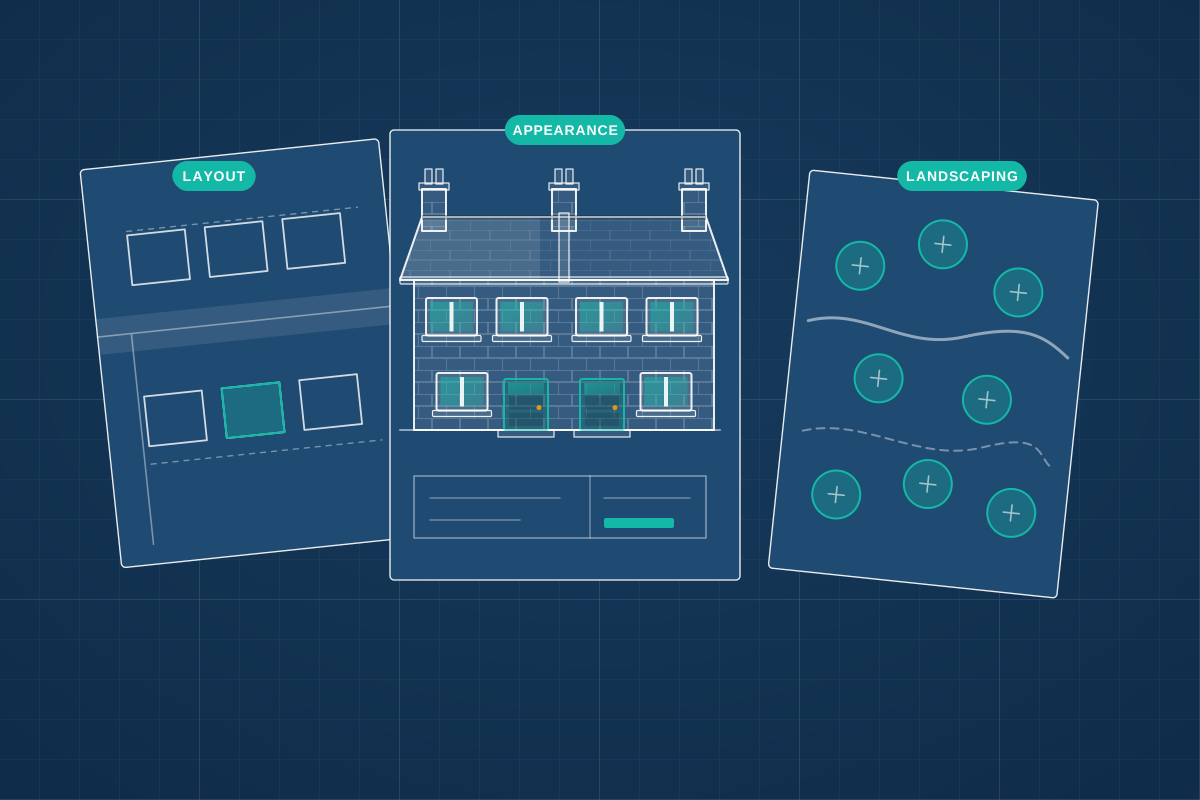
Reserved matters are the details left undecided when outline permission was granted, usually some or all of appearance, landscaping, layout, scale and access. A reserved matters application sets them out in full so the council can approve the actual buildings. The design has to stay within the outline permission, its parameter plans, any design code, its conditions and any legal agreement, and it must be submitted before the outline deadline runs out. A good professional begins with the outline decision notice itself, then designs a scheme that works for you and fits what was approved, flagging early anything that would need a different type of application.
How a professional can help
- Reading the outline permission: They go through the decision notice, conditions, approved plans and any planning agreement to set out exactly what the detailed design must respect, and what is still open.
- Detailed design within the parameters: They design house types, layouts, heights and materials that stay within the approved limits, while meeting local design guidance and your own requirements.
- Landscaping and boundary details: Where landscaping is reserved, they prepare planting, boundary treatment and hard surfacing details, bringing in a landscape specialist for larger sites.
- Clearing the outline conditions: Many outline permissions require extra information with or before reserved matters, such as levels, drainage or ecology plans, and they coordinate this alongside the application.
- Spotting when a different route is needed: If your preferred design falls outside the outline, they explain whether varying the outline conditions or making a fresh full application would be more appropriate.
Is this right for you?
- You’ve bought a plot with outline permission and want to design your own home on it.
- You obtained outline permission on your land and are ready to fix the detailed design before building or selling.
- The deadline for submitting reserved matters is approaching and you need a scheme prepared in time.
- A previous reserved matters application was refused and you need a revised design that answers the council’s concerns.
How the project usually runs
- Review the outline decision: A professional reads the outline permission, conditions, parameter plans and any legal agreement, and confirms which matters are reserved and when the submission deadline falls.
- Survey and design: Working from an accurate site survey, they develop the detailed layout, house types, elevations, materials and landscaping, testing the design against the outline limits as it evolves.
- Pre-application check: On larger or sensitive sites, they may share the emerging design with the council’s planning and design officers to iron out issues before the formal submission.
- Submit and agree the details: The reserved matters application goes in with any information required by the outline conditions. The council consults neighbours and specialists, then approves or refuses the details.
- Conditions and technical design: With the details approved, the remaining pre-commencement conditions are discharged and Building Regulations and construction drawings are prepared so work can start within the time limit.
What affects the cost
- Which matters are reserved: appearance alone involves far less work than layout, scale and landscaping together.
- The number of buildings or homes, and how many different house types need designing.
- How tightly the outline parameters, design code or conditions constrain the design.
- How many outline conditions require reports or details alongside the reserved matters submission.
- Whether specialist input is needed on landscaping, drainage, highways or ecology.
- How close the deadline is, and whether the design work has to be compressed to meet it.
Reserved matters rules to know
- In Scotland, the equivalent of reserved matters is an application for approval of matters specified in conditions.
- The council can’t revisit the principle of development at this stage, but it can refuse details that don’t meet its policies.
- If the reserved matters deadline on the outline permission is missed, the outline lapses and a new application is needed.
- Approval of the details doesn’t cover Building Regulations, which need their own separate approval for the construction work.
Questions people ask
Can I change the design that was shown at outline stage?
Illustrative drawings submitted with the outline application usually aren’t binding unless they were approved or tied in by a condition. Parameter plans, approved access arrangements and the conditions themselves are binding. Your professional can separate the two and show how much freedom you really have.
Can I submit reserved matters if I didn’t get the outline permission myself?
Yes. Planning permission generally runs with the land, so whoever now owns or controls the site can apply for reserved matters, as long as it’s done before the outline deadline. Check whether the outline permission is tied to a legal agreement that your purchase will take on.
Can reserved matters be submitted in phases?
Often, yes. Reserved matters can be submitted for different matters or different parts of a site at different times, as long as each falls within the outline permission and its deadline. Phasing is common on larger sites, and your professional can check whether the outline conditions set out a phasing plan.
What if my design doesn’t fit the outline permission?
If the differences are modest, it may be possible to vary a condition or parameter plan on the outline permission first. If the scheme is fundamentally different, a new full planning application is usually the cleaner route. A professional can compare the options before you commit to a design.
Do I also need to discharge conditions?
Usually. Outline permissions often include conditions to be satisfied before or alongside reserved matters, such as drainage, levels, materials or ecology details, plus others before work starts. These are separate submissions, and starting work without clearing a pre-commencement condition can put the permission at risk, so they need tracking from the outset.
Available across the UK
Professionals cover the whole of the UK: England, Scotland, Wales and Northern Ireland. Planning and Building Regulations differ between the four nations, and your professional will work to the rules that apply where your property is.
- Get free quotes
- Discharge of Planning Conditions
- Self-Build and Custom-Build Homes
- Landscape Architecture and Garden Design
- Technical and Construction Drawings
- Change of Use
- Conservation Area Projects
- Design and Access Statements
- Full Planning Applications
- Heritage and Conservation Architects
- Heritage Statements
- Householder Planning Applications
- All services
- Find your area