Understand your Section 106 obligations and CIL charges
For developers, self-builders and landowners facing planning obligations or a levy bill. Compare quotes from professionals who can explain what’s being asked, check reliefs and help you plan ahead.
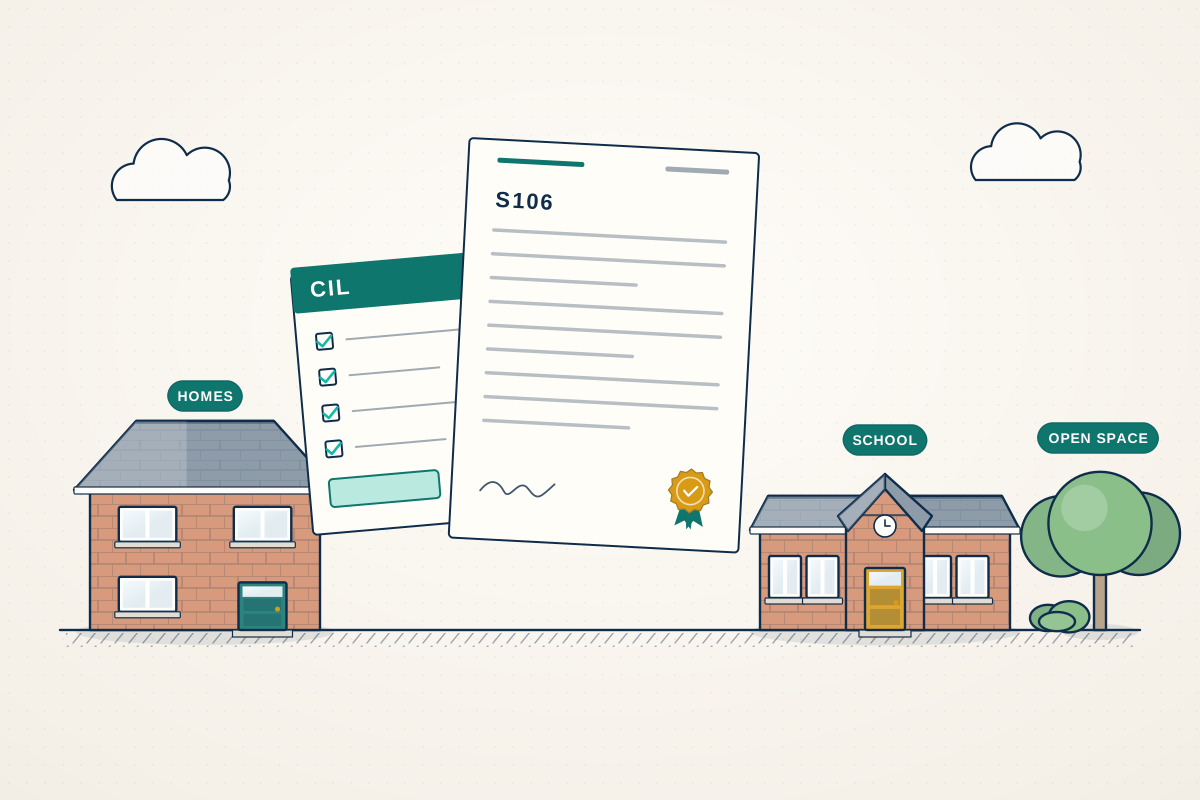
When a development adds homes or floorspace, the council may ask for contributions towards local infrastructure. In England and Wales this happens in two main ways. A Section 106 agreement is a legal agreement tied to the permission, which might require affordable housing, payments towards schools or open space, or restrictions on how the site is used. The Community Infrastructure Levy, or CIL, is a charge per square metre of new floorspace at rates set in each adopting council’s charging schedule. Both can affect whether a scheme is viable, and CIL has strict procedures: missing a form before work starts can cost you a relief or trigger surcharges. A good professional explains your liabilities early and keeps the paperwork on track.
How a professional can help
- Checking CIL liability: They check whether your council charges CIL, which rates and zones apply, and how much new floorspace counts, including any credit for existing buildings that have been in lawful use.
- Claiming exemptions and reliefs: They identify reliefs that may apply, such as for self-build homes, residential annexes, extensions or social housing, and make sure claims are made at the right time.
- Managing the CIL forms: They prepare the assumption of liability, relief claims and commencement notice in the correct order, so you don’t lose reliefs or face surcharges by accident.
- Reviewing Section 106 requests: They test whether the obligations the council asks for are necessary, directly related to the development and fair in scale, and negotiate where they aren’t.
- Viability evidence: Where the obligations sought would make a scheme unviable, they prepare or coordinate a viability assessment to support a reduced or rephased package.
- Changing an existing agreement: If circumstances change, they advise on varying or discharging a Section 106 obligation, working alongside your solicitor, who handles the legal drafting.
Is this right for you?
- You’re building one or more new homes and want to know whether CIL applies before you buy land or start work.
- You’re a self-builder and need to claim the exemption correctly before work begins.
- The council has sent draft Section 106 heads of terms and you’re not sure they’re reasonable.
- An existing Section 106 agreement is stopping you from selling, financing or changing a development.
How the project usually runs
- Early review: Your professional checks the council’s charging schedule, its policies on affordable housing and contributions, and any pre-application feedback, to understand what’s likely to be asked.
- Agree heads of terms: During the planning application, the main obligations are agreed with the council in outline, often after negotiation and sometimes supported by viability evidence.
- Legal agreement or undertaking: Solicitors for both sides draft and complete the Section 106 agreement or unilateral undertaking, and the planning permission is issued once it has been signed.
- CIL paperwork before starting: Liability is assumed, any reliefs are claimed and confirmed by the council, and a commencement notice is submitted before any work begins on site.
- Compliance through the build: Payments and obligations are met at the trigger points set out in the agreement or the council’s instalment policy, and evidence of compliance is kept.
What affects the cost
- Whether the project involves CIL only, a Section 106 agreement, or both.
- How many obligations the council is asking for, and how much negotiation they need.
- Whether a viability assessment is needed, and whether the council commissions its own review of it.
- How complex the site’s ownership and finance are, as all owners and usually any lender must sign a Section 106 agreement.
- Whether you’re changing an existing agreement, which can involve legal and council costs as well as advice.
Section 106, CIL and the UK nations
- Section 106 agreements and CIL apply in England and Wales, and only councils that have adopted a charging schedule collect CIL.
- In London, a Mayoral CIL can apply in addition to the borough’s own charge.
- Scotland uses Section 75 planning obligations and Northern Ireland uses Section 76 planning agreements, each with its own rules.
- CIL forms must be submitted in the right order before work starts, the rules are strict, and councils have little discretion to waive them.
Questions people ask
What’s the difference between Section 106 and CIL?
A Section 106 agreement is negotiated for a specific site and can require things like affordable housing, on-site works or payments towards particular projects. CIL is a standard charge on new floorspace, set out in the council’s charging schedule, and isn’t normally negotiable. A single development can be liable for both.
Do house extensions pay CIL?
Most householder extensions don’t end up paying CIL, but the rules have exceptions, for example for larger additions or where a new dwelling is created, and some exemptions must be claimed before work starts. Check with your council, or ask a professional to review your project against the regulations before you begin.
How does the self-build exemption work?
If you’re building your own home to live in, you may be able to claim an exemption from CIL. The claim must be made, and accepted by the council, before work starts, and you’ll need to submit a commencement notice and, after completion, evidence that you built the home and live in it. If you sell or let it within a set period, the levy can become payable.
Can a Section 106 agreement be changed?
Yes, by agreement with the council through a deed of variation, or in some cases by a formal application to modify or discharge the obligation once a set period has passed. Changes are often needed after a scheme is redesigned or when a Section 73 application creates a new permission. Your professional works alongside your solicitor, who handles the legal drafting.
What happens if I start work without sorting out CIL?
Starting before the right forms are in place can mean losing reliefs you hadn’t yet claimed, paying surcharges, or the whole charge becoming payable straight away. The exact consequences depend on the relief and differ between England and Wales, and councils have little discretion to waive them, so get the paperwork in order before any work begins on site.
Available across the UK
Professionals cover the whole of the UK: England, Scotland, Wales and Northern Ireland. Planning and Building Regulations differ between the four nations, and your professional will work to the rules that apply where your property is.
- Get free quotes
- Full Planning Applications
- Site / Development Feasibility
- Self-Build and Custom-Build Homes
- Residential Developments
- Change of Use
- Conservation Area Projects
- Design and Access Statements
- Discharge of Planning Conditions
- Heritage and Conservation Architects
- Heritage Statements
- Householder Planning Applications
- All services
- Find your area