Confirm whether you have subsidence before deciding on any repair
For owners with diagonal cracks, sticking doors or a sloping floor who suspect subsidence. Describe what you have seen and compare quotes from structural engineers who check the soil, the drains and the trees.
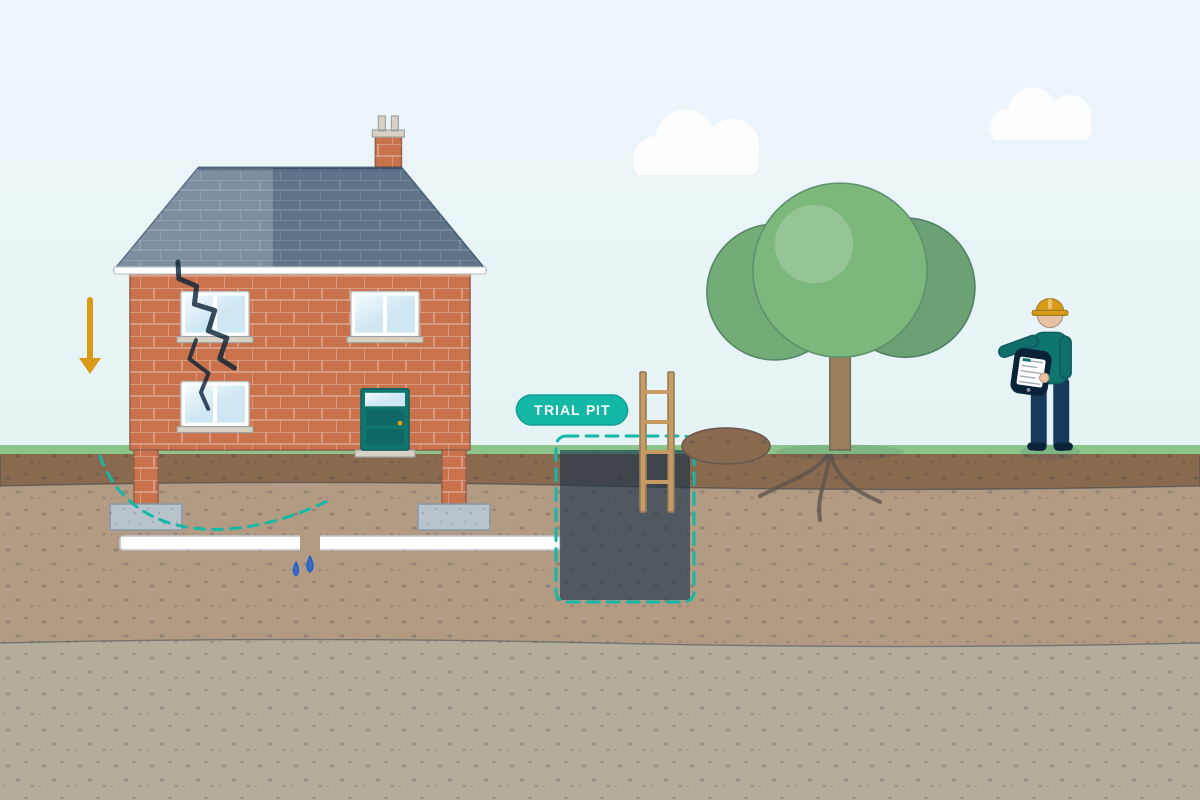
Subsidence is the downward movement of the ground under a building’s foundations. It is typically linked to clay soils, nearby trees and leaking drains, and it can cause cracks that open and close with the seasons, doors and windows that stick, and floors that slope. Because the signs overlap with harmless movement, it needs proper evidence. An engineer investigating subsidence will usually arrange a trial pit to see the foundations and soil, check the drains and trees, take levels, and often monitor the building for a period before reaching a view. Subsidence is usually dealt with through your buildings insurer, so the investigation often runs alongside a claim.
How a professional can help
- Telling subsidence from other movement: Cracks, level readings and the history are compared with the signs of subsidence, heave, thermal movement and shrinkage, so the cause is identified before anything is repaired.
- Trial pits and soil tests: A trial pit beside the wall shows the foundation type and depth and the soil beneath. Samples can be tested for the type of clay and checked for roots, which helps show whether trees or something else is behind the movement.
- Checking drains and water: A CCTV survey and water test of the drains can show cracked or displaced pipes, and leaks can wash away or soften the soil under the foundations.
- Trees and vegetation: They identify nearby trees and hedges, their species, height and distance, and where roots are found in the soil, and suggest a tree specialist where management of a tree is being discussed.
- Monitoring over months: Crack gauges and level markers are read over several months to show whether the building is still moving, and whether it moves up and down with the seasons.
- Working with your insurer: They can supply a report for your insurer or review the insurer’s engineer’s findings, and explain proposed repairs such as underpinning or tree work in plain terms.
Is this right for you?
- You’ve seen diagonal or stepped cracks, sticking doors or sloping floors and fear subsidence, particularly after a dry summer.
- You live on clay soil with a large tree or hedge close to your house or the neighbour’s.
- Your insurer or a neighbour has mentioned subsidence, or your street has a history of it.
- You’re buying or selling a house that has been underpinned or has had subsidence claims, and need evidence of the current position.
How the project usually runs
- Initial inspection: The engineer records the cracks, checks the levels of floors and window sills, and notes the trees, drains and history. This often shows whether subsidence is likely or something less serious is going on.
- Tell your insurer: If subsidence looks likely, notify your buildings insurer, who may appoint a loss adjuster (who manages the claim for the insurer) and an engineer. Independent advice is still available and can be useful alongside theirs.
- Site investigation: A trial pit exposes the foundation and soil, samples may be taken for testing, and the drains are surveyed. A tree specialist may record the species and where the roots are.
- Monitoring: Gauges are fixed over cracks and level studs are placed on the walls. Readings are taken over several months to show whether movement continues and how it changes with the seasons.
- Report on cause and options: The findings are written up, setting out whether subsidence is confirmed, the likely cause and the options, such as drain repairs, tree work or underpinning, which is designed separately by an engineer.
What affects the cost
- How many trial pits are needed, and whether boreholes or soil testing are required, as foundation depths can vary around a house.
- Whether the drains need a CCTV survey, water testing or local excavation to check them.
- How long monitoring has to run, and how many readings and site visits are needed.
- Whether your insurer is already covering the investigation, or you are paying for your own independent opinion.
- Whether a tree specialist or soil laboratory is needed in addition to the engineer.
- The size and complexity of the building, and how many walls are affected.
Insurers, repairs and approvals
- Subsidence is usually dealt with through your buildings insurer, so tell them promptly and read your policy. They normally manage investigation and monitoring before any repair, and you can still take independent advice.
- Underpinning and other structural repairs need building control approval. How that works differs across England, Scotland, Wales and Northern Ireland (a building warrant in Scotland), and structural engineers work across the whole UK.
- If a tree is thought to be the cause, do not cut it down yet. Protected trees need the council’s consent, and removing a tree from clay soil can make the ground swell, so agree a plan with the engineer and a tree specialist first.
- Underpinning a shared wall, or digging below a neighbour’s foundations, can need notices under the Party Wall etc. Act 1996, served before work starts. The Act covers England and Wales; Scotland and Northern Ireland differ.
Questions people ask
What are the signs of subsidence?
Typical signs are diagonal or stepped cracks, often wider at the top, doors and windows that stick, cracks that open and close with the weather, and gaps appearing where an extension meets the main house. None of these proves subsidence on its own, so an investigation looks for evidence of ground movement.
What is the difference between subsidence and heave?
Subsidence is the ground sinking under the foundations, often when clay dries out. Heave is the ground swelling upwards, often when clay takes in water, for example after a tree has been removed. Both move the building and can crack walls, but the cause and repair differ, which is why the cause needs to be identified.
Who pays for a subsidence investigation?
If your buildings insurance covers the damage, the insurer normally arranges and pays for investigation and repair after you notify them, apart from any excess. If you are not insured, are buying, or want your own opinion, you may pay for an independent engineer. Check your policy wording or ask your insurer.
Is a house with subsidence unsafe to live in?
Often the movement is slow and owners stay in the house while it is investigated, but each case is different. If a crack widens quickly or a wall, floor or ceiling seems to be shifting, treat it as urgent: keep people away from that area and call an engineer or your insurer the same day.
Will a subsidence claim affect selling my house?
It can matter to a buyer or lender, who will want to know the cause, whether the movement has stopped and what was done. Keep the engineer’s reports, repair drawings, warranties and the insurer’s letters so you can answer those questions with evidence.
Available across the UK
Professionals cover the whole of the UK: England, Scotland, Wales and Northern Ireland. Planning and Building Regulations differ between the four nations, and your professional will work to the rules that apply where your property is.
- Get free quotes
- Crack and Movement Monitoring
- Cracks and Movement Investigations
- Subsidence Repair Design
- Arboricultural Reports
- Bowing, Leaning and Bulging Wall Assessments
- Chimney Stack and Parapet Stability Checks
- Expert Witness and Defect Investigations
- Fire, Flood and Impact Damage Assessments
- Historic and Listed Building Structural Surveys
- Independent Second Opinions and Design Checks
- All services
- Find your area