Monitor vibration from nearby building work and keep a record
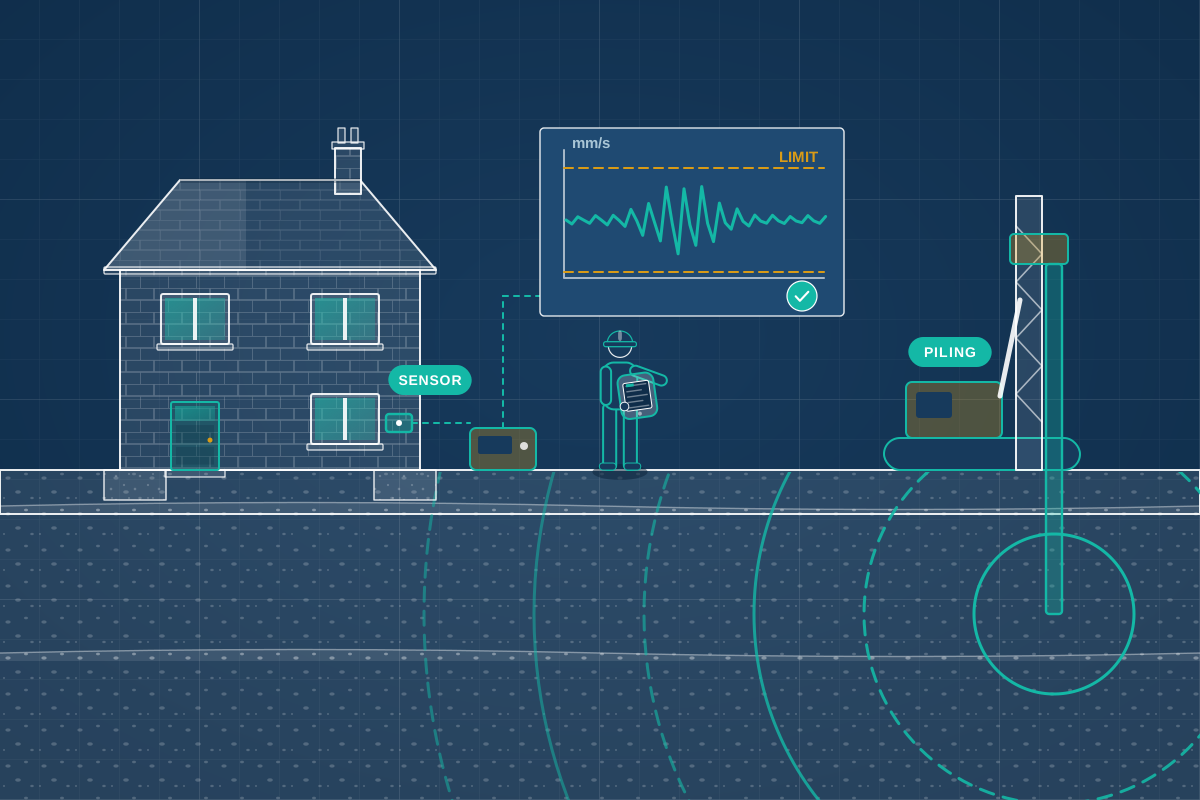
For owners next to piling, demolition, excavation or roadworks, and for builders who need to show their work stays within safe limits. Describe the site and compare quotes from engineers who install and read vibration monitors.
Piling, demolition, heavy excavation, compaction, roadworks and even heavy site traffic can send vibration through the ground into nearby buildings. Most of it is felt rather than harmful, but when cracks appear or a neighbour is worried, opinions are not enough. Vibration monitoring means fixing a small sensor on or near the building, recording movement through the work, and comparing the readings with agreed limits. An engineer sets it up, reads the data and reports. It protects both sides: the neighbour gets early warning, and the builder has a record showing the work stayed within limits, or the point at which it did not.
How a professional can help
- Setting the limits before work starts: They agree trigger levels (the readings at which something must change) with the builder, your surveyor or the council. The levels reflect the building’s type and condition and recognised standards, so everyone knows in advance what a reading means.
- Choosing where to put the monitors: They place sensors at the point most affected, usually on the foundation or wall nearest the work. On larger sites they add more, so you have more than a single reading to rely on.
- Recording through the noisy work: They set up recording through piling, breaking, demolition or compaction and keep the instruments running and calibrated, so the readings capture the peaks and not only the average.
- Warnings when limits are near: Where the equipment allows, alerts can go to the engineer and site manager when a limit is reached. The contractor can then slow down, change the method or pause, which reduces the risk of damage.
- Linking readings to the building’s condition: They compare monitoring with the record of condition taken beforehand and any inspection afterwards, so a later crack can be judged against what was there and what the vibration was.
- Reports that give everyone the facts: They produce clear reports with graphs and plain-language notes for the builder, the neighbour, a party wall surveyor, an insurer or a council, whichever needs to see them.
Is this right for you?
- A neighbour’s piling, demolition or basement excavation is about to start next to your house.
- You are the builder or developer and a party wall award, planning condition or insurer calls for vibration monitoring.
- Roadworks, rail or heavy plant outside your building are causing vibration you can feel.
- Your home is old or fragile, or already has cracks, and you want evidence of what was there before.
- You are a surveyor or managing agent looking after several properties next to a site.
How the project usually runs
- Brief and site review: The engineer asks what work is planned, when, and how close it will be, and visits to see the buildings, the ground and where monitors can go.
- Background readings and limits: They record the background vibration before the work starts. If there is no record of the building’s condition, they make one. They agree the monitoring locations, the trigger levels and who is told when one is reached.
- Install and test: Sensors are fixed in place and tested before the work starts. Data is recorded throughout the noisy stages and is often checked remotely as well as in person.
- Responding to readings: If readings approach a limit, the engineer tells the contractor and agreed contacts promptly so methods can change, and logs what happened and what was done.
- Final report and inspection: A report sets out all the readings against the limits, and the engineer can inspect the building afterwards and compare it with the record made before work began.
What affects the cost
- How long the vibration-causing work is expected to last, since equipment is on site for the whole period.
- The number of monitoring points needed, and whether buildings on several sides need coverage.
- Whether live alerts and remote data checks are wanted, or readings are reviewed at set intervals.
- Whether a record of the building’s condition before and after is included, or arranged separately.
- How the reports will be used, for example for a party wall surveyor, an insurer or a planning condition.
Limits, party wall awards and approvals
- In England and Wales, a party wall award for deep excavation or piling near a neighbour’s building can include vibration limits and monitoring, and a party wall surveyor can confirm what applies. Scotland and Northern Ireland have different rules.
- Planning permission for larger sites may set construction conditions covering noise and vibration. Your council’s environmental health team can say what applies. Rules differ across England, Scotland, Wales and Northern Ireland.
- Limits come from recognised standards for building damage and for human comfort. People can feel vibration at levels far below those likely to harm a building, so a feeling is not proof of damage.
- Engineers who install and read monitors cover the whole of the UK, and the planning and environmental rules they work to depend on where the site is.
Questions people ask
Does feeling vibration mean my house is being damaged?
Not on its own. People can notice vibration at levels far below those likely to harm a building, which is why it can feel alarming. Monitoring measures it objectively and compares it with recognised limits. If readings stay within limits and the building shows no new cracks, damage is unlikely, though older or fragile buildings may need lower limits.
What does a vibration monitor measure?
Usually peak particle velocity, which is how fast the ground or structure is moving at its fastest, along with the frequency of the vibration. The sensor records events during the work with time stamps, so a reading can be linked to an activity such as a pile being driven.
Who normally arranges and pays for monitoring?
Usually the builder or developer arranges and pays for it, particularly where a party wall award, planning condition or insurer requires it. A neighbour can ask for monitoring, or commission their own independent monitoring for a separate record. If you have a party wall surveyor, ask them what is required.
Is vibration monitoring the same as crack monitoring?
No. Vibration monitoring records short events during the work. Crack monitoring uses gauges or markers to measure slow changes in a crack over weeks or months. They answer different questions and are often used together, so you can see both what the work did and whether any crack has changed.
Can monitoring stop the work?
Monitoring does not stop anything by itself. But where limits have been agreed, for example in a party wall award or the contractor’s method statement, a reading that reaches a trigger level normally means the contractor must review the method or pause. Make sure the agreed action is written down beforehand.
Available across the UK
Professionals cover the whole of the UK: England, Scotland, Wales and Northern Ireland. Planning and Building Regulations differ between the four nations, and your professional will work to the rules that apply where your property is.
- Get free quotes
- Crack and Movement Monitoring
- Party Wall for Piling and Deep Excavation
- Schedules of Condition
- Independent Structural Advice for Neighbours
- Bowing, Leaning and Bulging Wall Assessments
- Chimney Stack and Parapet Stability Checks
- Cracks and Movement Investigations
- Expert Witness and Defect Investigations
- Fire, Flood and Impact Damage Assessments
- Historic and Listed Building Structural Surveys
- Independent Second Opinions and Design Checks
- All services
- Find your area